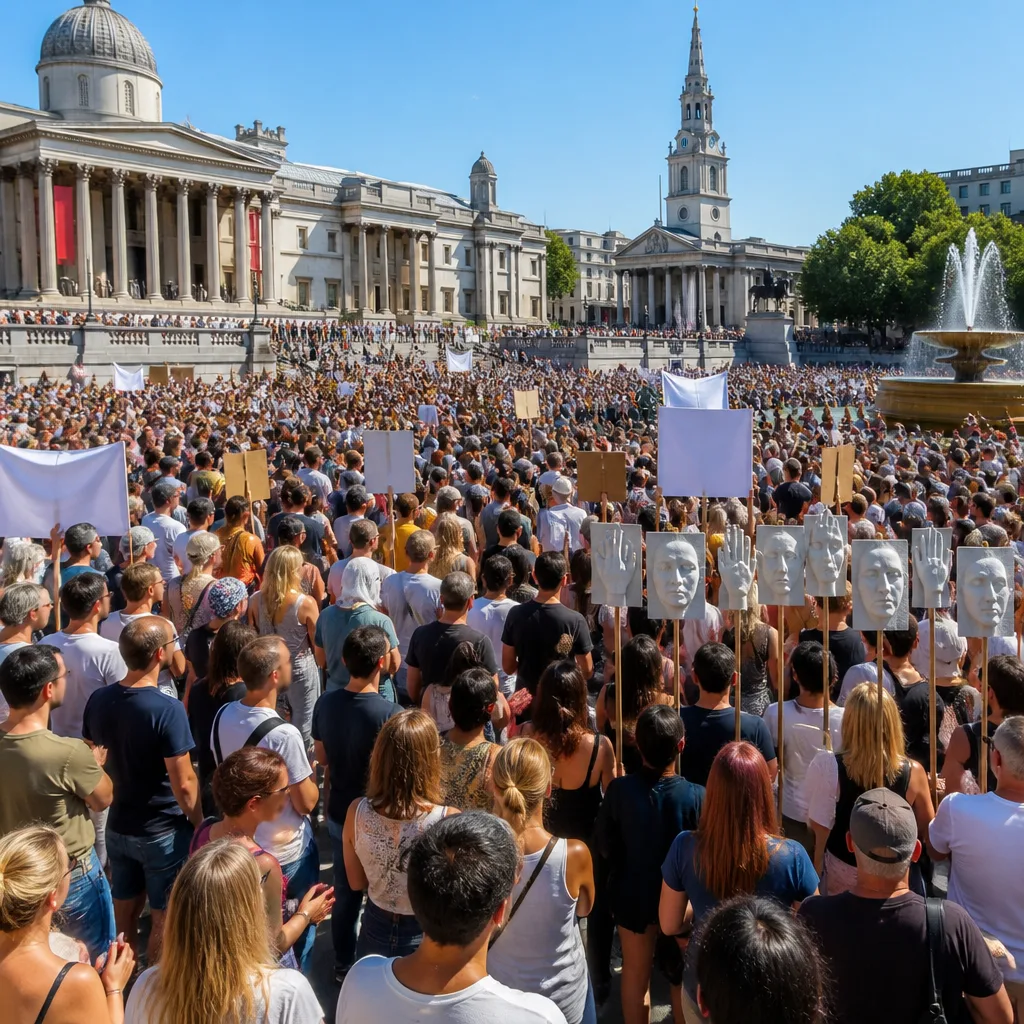
About 150,000 people marched through central London in what organisers described as the largest Trans+ Pride event the capital has hosted, culminating in a mass rally in Trafalgar Square.
Mass turnout and public messages
The procession set off near the BBC’s central London headquarters and moved through the city in hot conditions, eventually spilling into the square where speakers addressed the crowd from the steps and around the fountains. Banners and placards carried a mix of defiant slogans and personal appeals, while the endpoint — the square overlooked by Teresa Margolles’s installation of face casts representing trans, non‑binary and gender‑non‑conforming people — underlined the event’s claim to public space.
- Attendance: Organisers’ estimate of around 150,000.
- Endpoint: Trafalgar Square, marking the first time the rally has finished at that site.
- Visuals: Placards referenced access to care, bodily autonomy and safety for trans communities.
Bereaved families and healthcare concerns
Speakers included relatives of trans people who have died, who blamed policy shifts and long waits for gender‑affirming treatment for worsening outcomes. A mother who campaigned publicly after her daughter’s death warned that more young people could die unless political leaders take action to reverse what she characterised as restrictive policies.
“Things have got so much worse, and it’s just so disappointing,”
The mother cited her daughter’s experience of prolonged waiting for care — documented as 1,023 days in the tribunal process referenced by campaigners — and described a catalogue of mistreatment including name‑calling and misgendering that compounded difficulties in accessing appropriate support.
Organisers’ framing and political context
Founders and long‑term activists framed the event as both a celebration and a demonstration of resilience. One founding member said the decision to end the march in Trafalgar Square was symbolic, asserting that the city belongs equally to trans people. The rhetoric at the rally mixed demands for immediate policy change with calls to protect the safety and dignity of trans communities across the UK.
Speakers urged action on several fronts: accelerating access to gender‑affirming healthcare, ensuring safe public spaces, and reversing administrative or policy barriers they say have worsened since earlier public campaigns and inquests. The protest included a wide demographic, and the public presence of families and bereaved relatives added a personal, political weight to the event.
Implications and likely follow‑on
The scale of the demonstration will increase pressure on ministers and senior politicians to set out clearer plans on healthcare pathways and protections for trans people. Campaigners are likely to use the turnout as leverage to demand policy commitments from local and national leaders. The participation of bereaved relatives, and their public testimony about prolonged waits and perceived policy backsliding, is likely to reinvigorate debate around the adequacy and safety of current provision for young trans people.
| Item | Figure |
|---|---|
| Estimated march attendance | 150,000 |
| Documented waiting time referenced by campaigners | 1,023 days |
What happens next will depend on whether political figures respond with concrete proposals on NHS services, legal protections and school‑based support, and whether campaigners sustain public pressure. For many who marched, the demonstration was an emphatic statement that trans people and their families intend to remain visible and to press for systemic change in the UK’s approach to gender‑affirming care and civil protections.
As the day closed, organisers declared that the movement’s aims were to continue fighting until every trans person could be “safe, seen, and free,” turning a large, celebratory crowd into a sustained political signal to policymakers in Westminster and beyond.