
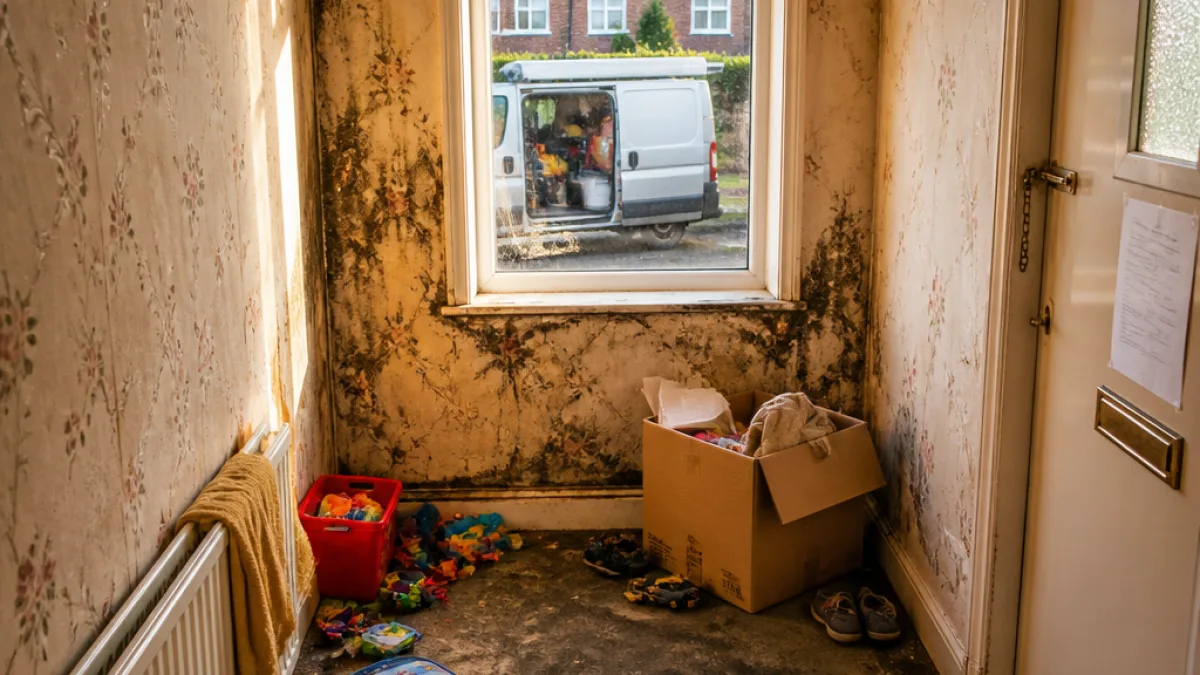
Family rehoused in Wolverhampton forced to fight for basic repairs
A mother of seven who was rehoused in Wolverhampton after a no-fault eviction in London has described living in a property she says is riddled with damp and mould. The case has become an example of how the West Midlands’ new Renters' Rights Act and a mayoral training programme are being used by tenants to secure improvements in privately rented homes.
The woman, identified only as Leanne to protect her identity, said she and two adult children had been moved to the city when her London tenancy ended. She told local campaigners she was upset by the move and by the condition of the house offered by the local authority.
"I had lived in London all my life but was forced out of my home by my landlord, despite having seven children."
Speaking before repair work began, Leanne described the emotional toll of leaving roots in London and even being separated temporarily from family dogs left in the care of the Battersea Dogs Home. Her account also highlights frustrations with a property management agency which she said had been slow to act over an ongoing damp problem.
Mayor’s Renters' Rights training spurs action
The West Midlands Combined Authority (WMCA) and the Mayor have launched a Renters' Rights Campaign Fund and a series of free training sessions intended to raise awareness of sweeping changes to private rental law introduced in May. The new Act bans Section 21 'no-fault' evictions, ends fixed-term tenancy contracts and rental bidding, and places limits on rent increases.
Leanne attended one of those training courses run locally by Access to Business. After the session she said she felt better equipped to press her case, and the landlord subsequently intervened personally to begin work to tackle the damp and mould at the Wolverhampton address.
- 225,000 privately rented homes in the West Midlands are overseen by the new campaign – the combined authority highlights that a quarter of those are estimated to fall below minimum standards because of issues such as damp, mould and cold.
- Training and community outreach are part of a mayoral fund aimed at helping tenants understand and use the new rights.
- Local councils still have duties to provide accommodation, but rehousing choices can place families far from their existing support networks.
Local consequences for Wolverhampton and the region
For Wolverhampton residents and local services, the case raises immediate and practical questions. Rehousing families from London — in this instance some 120 miles away — has implications for school placements, healthcare continuity and social support. It also places responsibility on Wolverhampton landlords and local housing teams to ensure accommodation meets legal standards.
Campaigners warn that while the Renters' Rights Act strengthens tenants’ legal protections, enforcement and awareness are crucial. The mayor’s training initiative aims to bridge that gap by equipping tenants and community groups with the knowledge to prompt repairs and, where necessary, seek redress.
| Measure | Detail |
|---|---|
| Area affected | West Midlands / Wolverhampton |
| Privately rented homes in region | 225,000 (combined authority figure) |
| Proportion below minimum standard | A quarter, citing excessive damp, mould and cold |
Local councillors and tenant groups will be watching to see if the repairs to Leanne’s Wolverhampton home are completed promptly and whether the training scheme helps other tenants assert their rights without delay. For many residents in privately rented accommodation, the test will be not just the letter of the new law but how quickly landlords and property managers respond when poor conditions are highlighted.
The case offers a reminder that housing policy changes at regional level can have immediate, human consequences on the ground in Wolverhampton — for better or worse. With mayoral support and greater tenant awareness, officials hope more properties will be brought up to standard and fewer households will be moved long distances into unfamiliar communities.