
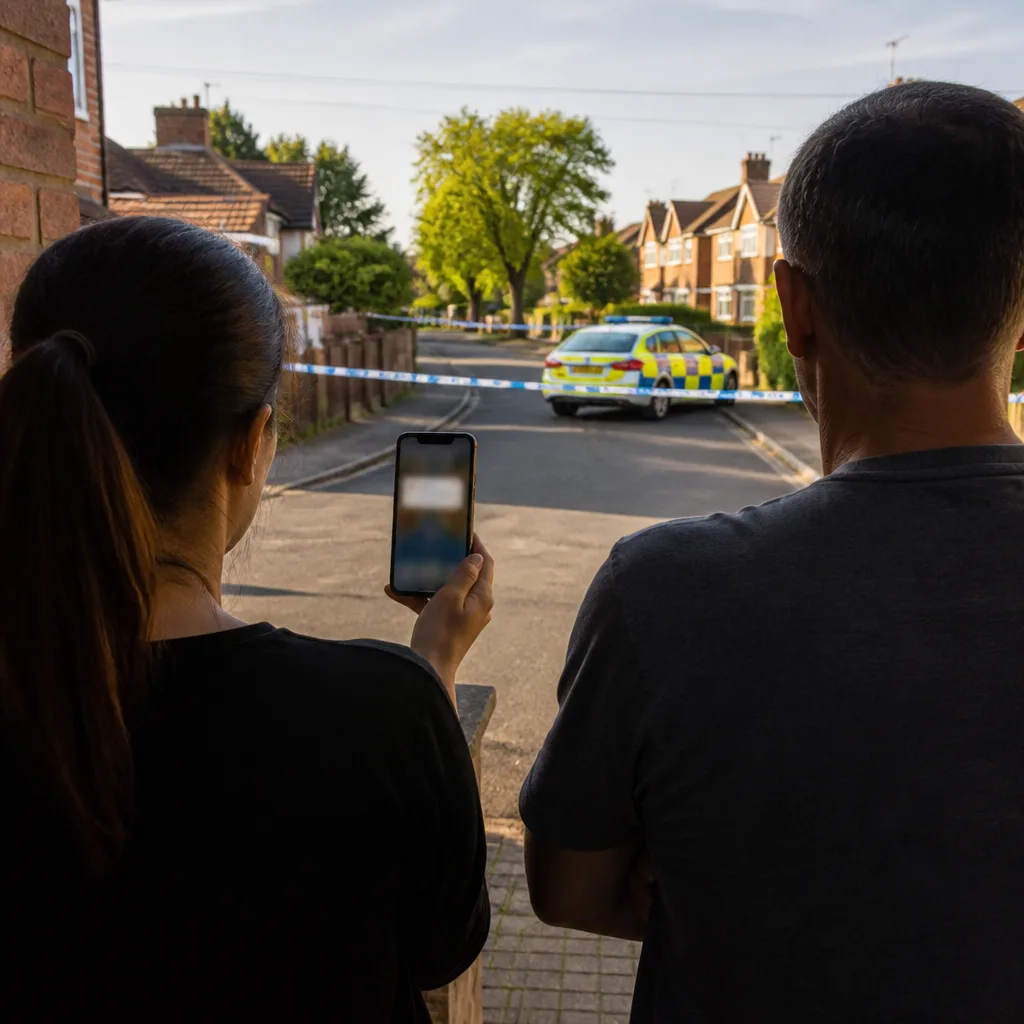
A new analysis of police-recorded incidents and smartphone self-reports has found that violent crime affects the mental well‑being of whole neighbourhoods, not only those directly victimised. The study, which matched nearly a decade of incidents recorded by Thames Valley Police with more than 90,000 self-reported wellbeing entries, concluded that stress in surrounding residents rises sharply after a violent incident and remains raised for about a week.
Study design and principal findings
Researchers examined every violent incident against a person that was known to police in areas served by Thames Valley Police between 2010 and 2017 and linked each report to contemporaneous self-reports of mental wellbeing submitted via a smartphone app. Because many individuals supplied multiple entries, the analysis could control for each person’s usual stress levels and focus on short-term changes following an event.
To reduce confounding, the researchers controlled for a range of day-to-day influences that might affect both crime and stress, including weather, daylight and day of the week, and also accounted for each month in each year to handle exceptional events such as elections or major sporting fixtures.
The principal behavioural finding was clear: when a violent crime is recorded in a neighbourhood, a substantial proportion of residents report higher stress. The effect is most pronounced in the first few days after the incident, but remains elevated for roughly seven days, indicating a sustained short‑term impact on community wellbeing.
Implications for policing, public health and communities
By demonstrating that the emotional consequences of violent crime extend beyond direct victims, the study points to several practical considerations for national and local responses to violence.
- Policing and prevention: Rapid communication and visible reassurance in the immediate aftermath of an incident may help reduce wider community anxiety.
- Public‑health services: Mental‑health support and information campaigns could be targeted at neighbourhoods following violent incidents to address short‑term spikes in stress.
- Community resilience: Local authorities and community groups might consider contingency plans to support residents’ sense of safety after a nearby violent event.
| Measure | Value |
|---|---|
| Period analysed | 2010–2017 |
| Police force | Thames Valley Police |
| Self-reports | More than 90,000 |
The study also sits against the backdrop of the broader crime picture in England and Wales, where there are approximately 1 million violent crimes each year. While not every resident will be aware of every incident in their area, prior research suggests that awareness of nearby violent crime is often high, whether through direct observation or indirect channels such as social networks and media.
Limitations and caution
The authors note important caveats. The data reflect incidents that were known to police and reported to the smartphone app, so the findings do not capture unreported violence or residents who do not use the app. The study is able to show a temporal association—stress rises after nearby violent incidents—but, as the researchers acknowledge, it cannot prove that every observed change in an individual’s stress was caused solely by that incident.
Nonetheless, the evidence of short‑term, neighbourhood‑level impacts strengthens calls for multi‑agency approaches that combine policing, health and community support to mitigate the wider harms of violent crime.
Editorial note: The analysis highlights how recorded acts of violence reverberate beyond victims, producing measurable increases in stress across local populations for several days. That pattern underlines the importance of prompt, coordinated responses that address both safety and mental wellbeing.