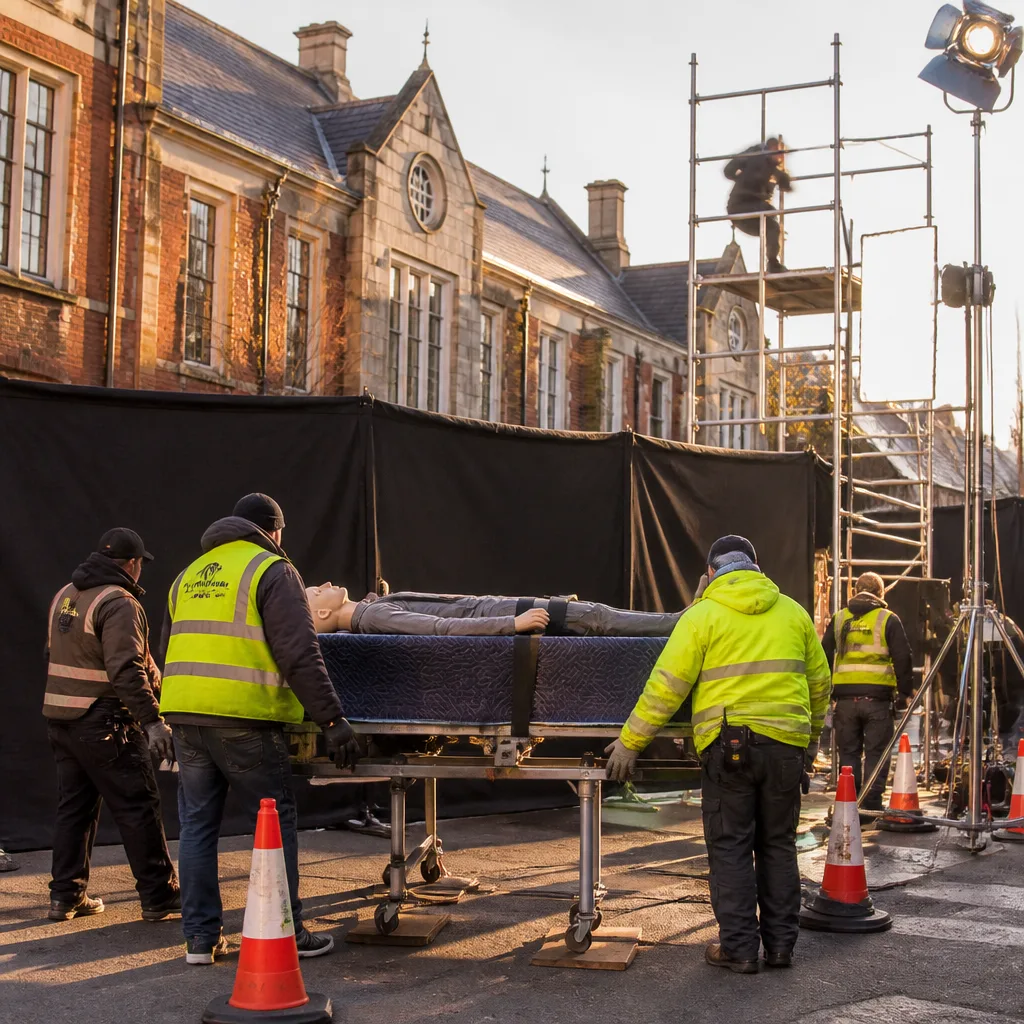
Russell T Davies has described the painstaking preparations that went into filming the disturbing final sequence of his Channel 4 drama Tip Toe, saying the production took several days and involved extensive measures to avoid upsetting passers-by and to look after the team.
Staged for safety and sensitivity
The scene, which depicts the hanging of the character Leo (played by Alan Cumming), was shot with a combination of a stunt performer, a dummy and the actor. Davies told The Independent the sequence required meticulous planning because it was filmed on a public street near a busy road and close to a school.
"It took about three days to film as we had to be very careful with it,"
He explained the crew had to pause daily when the nearby school dismissed pupils at 3.30pm, and that large screens were erected to shield the set from the road and passing motorists. Without those precautions, Davies said, drivers could have seen what appeared to be a man hanging and an accident might have followed.
On-set measures and emotional toll
Describing the first time the dummy was hoisted into view, Davies recalled an instinctive hush falling over the street as onlookers realised the gravity of what they were seeing. The combination of a stuntman, a dummy and Cumming was used across the shoot to achieve the necessary effect while limiting risk.
Davies also spoke about the psychological impact of filming such distressing material and how production choices were used to protect cast and crew. He praised the care and dedication of the team, and singled out a scheduling decision by producer Phil Collinson as particularly considerate: arranging for the hanging sequence to be filmed just before the production’s one-week break, giving those involved time to recover.
As Davies put it, even when an actor is performing, scenes of this nature can be traumatic — especially when they require physical restraints or props that simulate genuine harm — and the team needed breathing space afterwards.
- Filming took place over three days.
- Daily pauses were necessary when the nearby school finished at 3.30pm.
- The production used screens, a stuntman, a dummy and safety planning to protect the public and crew.
Context and broadcast considerations
The sequence is the culmination of a story that, as Davies has previously said, chronicles the events that lead to the horrific lynching. Broadcasters and producers routinely face dilemmas when presenting violent or disturbing material in public locations: the need to maintain creative integrity must be balanced against legal, safety and ethical responsibilities.
Davies’ comments offer a window into those decisions, underscoring both the logistical challenges of shooting sensitive scenes on location and the emotional labour demanded of those who make drama. He emphasised that the shoot, while "terrible" in its subject matter, was also "lovely" because of the mutual care shown by the cast and crew during a gruelling sequence.
| Element | Fact |
|---|---|
| Duration of sequence shoot | Three days |
| School break time affecting schedule | 3.30pm |
| Producer who altered schedule | Phil Collinson |
The disclosure will interest viewers mindful of how television manages depictions of violence and how production teams mitigate potential distress to the public. It also highlights the unseen labour that goes into protecting both a creative vision and the welfare of those who realise it on screen.
Channel 4 and the series’ production teams have not been asked for further comment in this report.