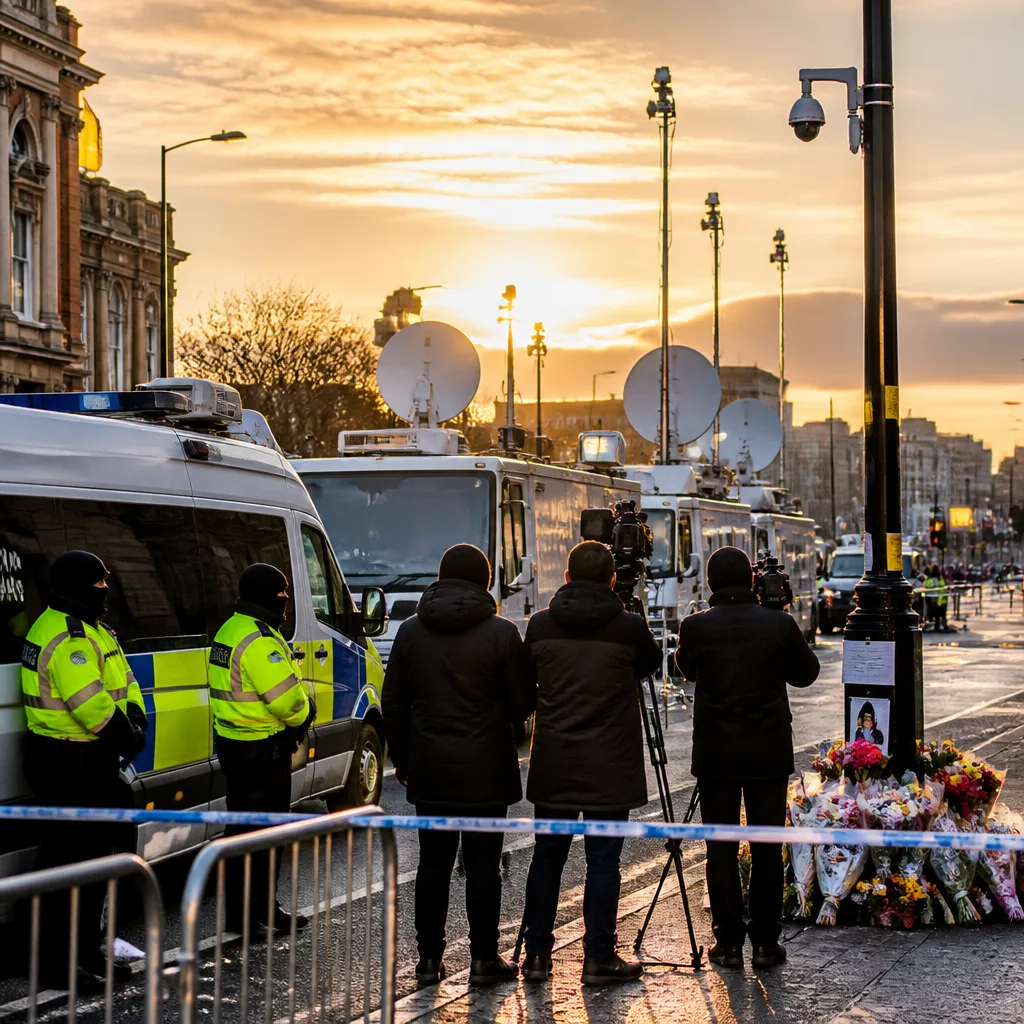
Counter‑terrorism police have said the killing of former Conservative MP and television personality Ann Widdecombe is being treated as a “targeted attack”, while stressing the case has “not been declared as a terrorist incident”.
Investigation escalates amid questions over public‑figure security
The development marks a significant escalation in an inquiry into the death of a woman who spent 23 years in the House of Commons and later found a broader audience on reality television.
Widely known for her forthright and often controversial interventions on subjects such as abortion, gay rights and women’s issues, she also reached viewers beyond politics through a memorable stint on Strictly Come Dancing and other reality programmes. Those dual identities — seasoned parliamentarian and television personality — have fuelled debate about the risks faced by public figures in Britain.
“targeted attack” — counter‑terrorism police (also noting the killing has “not been declared as a terrorist incident”).
Political fallout and calls for greater protection
The killing has already prompted renewed calls for improved security for public figures. Reform UK leader Nigel Farage drew attention to the need for more spending on protection for prominent individuals just days before Widdecombe’s death, a point that has been picked up in subsequent public discussion about how best to shield politicians and media personalities from harm.
While officers have characterised the murder as a targeted act, they have been careful to distinguish that description from a formal terrorist designation. That distinction will determine which investigative resources and legal avenues are engaged as the inquiry proceeds.
- Status: Investigation by counter‑terrorism police
- Designation so far: Described as a “targeted attack”
- Terrorism label: Not declared a terrorist incident
Public life and media profile
Before entering politics, and throughout her public career, Widdecombe was a recognisable figure in Britain. She represented constituents as an MP for more than two decades and cultivated a reputation as an unapologetic, straight‑talking commentator — traits that earned both ardent supporters and vocal critics.
Her later appearances on entertainment television broadened her audience, making her a familiar face outside Westminster. Those television roles are now part of the discussion about how public recognition might intersect with personal security risks.
| Role | Detail |
|---|---|
| Member of Parliament | Served for 23 years |
| Television appearances | Notable run on Strictly Come Dancing and other reality shows |
| Public profile | Known for outspoken views on abortion, gay rights and women’s issues |
Authorities have not released fuller operational details about the progress of the inquiry, including suspects, motive or location specifics. The phrasing used by counter‑terrorism teams indicates they are treating the killing as deliberately directed at Widdecombe, but investigators have so far stopped short of invoking the formal terrorist classification.
That careful language reflects the legal and operational differences between a criminal murder investigation and a case designated as terrorism, which would carry different investigative powers and public‑interest considerations.
As the probe continues, questions are likely to persist about the adequacy of personal protection for politicians and media figures — and whether recent warnings about the need for increased security funding were heeded in time. The timing of recent commentary by political figures, and the impact of heightened public visibility, will come under scrutiny as detectives and counter‑terrorism specialists pursue lines of inquiry.
Further updates are expected as police release additional information and the investigation progresses.