Private companies offering comprehensive health "MOTs" that scan asymptomatic people from head to toe are expanding quickly, drawing substantial consumer interest while stirring debate among clinicians and health policy experts about value, harm and the knock‑on effects for the NHS.
What are these services and who is using them?
Clinics such as Neko Health, Prenuvo and Ezra are marketing packages that combine imaging, blood tests and other checks to screen for a wide range of conditions before symptoms appear. Customers pay directly: one operator charges about £299 for a scan and, according to reporting, some firms have waiting lists numbering in the tens of thousands — one provider reportedly had a queue of 100,000.
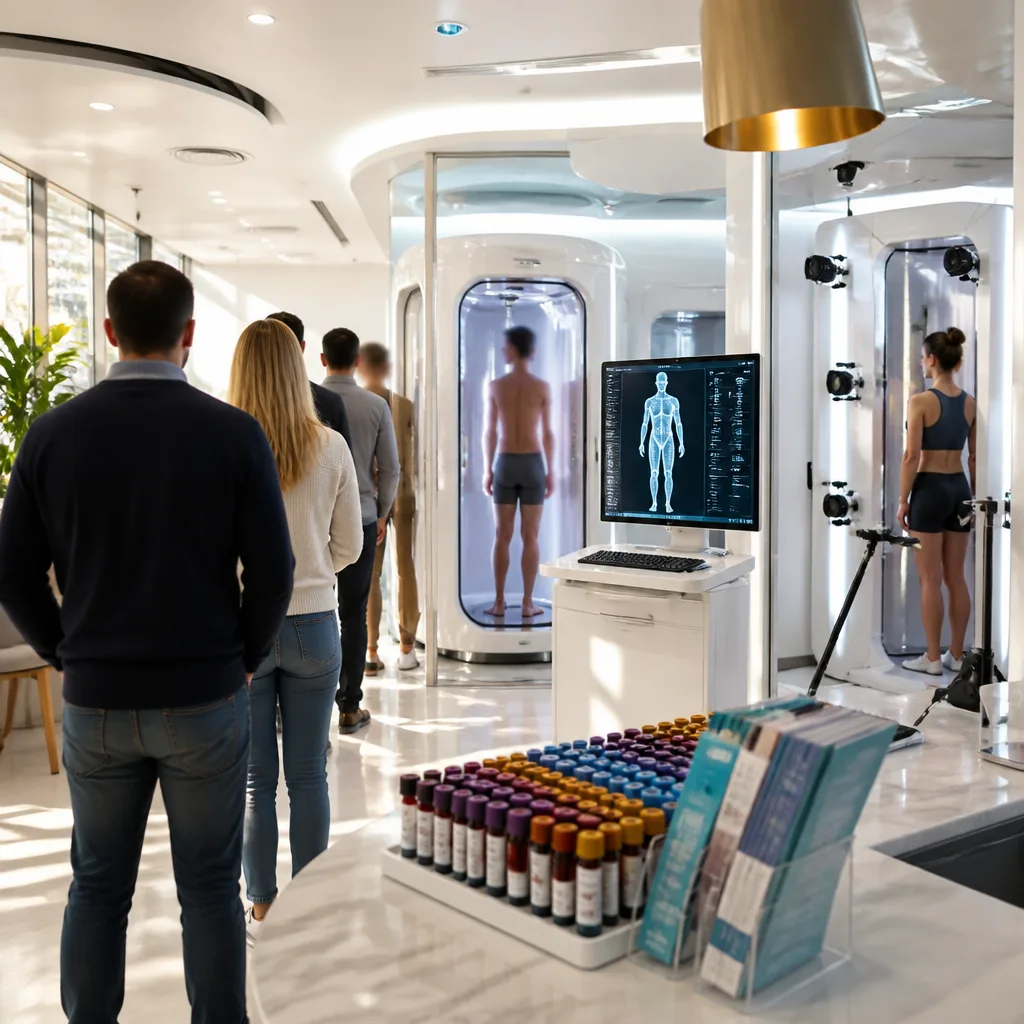
The experience is deliberately consumer‑friendly: patients are photographed by dozens of cameras to map skin lesions, stand inside scanners that create three‑dimensional body avatars and have bloods and other baseline measurements taken. Advocates present the service as an early‑detection tool that can pick up cardiovascular disease, some cancers, metabolic conditions and eye problems in people who feel well.
"The body scan industry sees this kind of treatment as a new frontier in healthcare," a founder of one company told reporters.
Evidence, uncertainty and clinical consequences
Medical professionals caution that the benefits of blanket scans for healthy individuals are not well established. Screening programmes are proven only when benefits outweigh downsides, such as false positives, incidental findings and over‑diagnosis — identifying abnormalities that would never have caused harm during a patient’s life but lead to further tests, anxiety and sometimes invasive procedures.
For the NHS, the growing popularity of private checks creates practical and ethical questions. When a commercial screen flags an abnormality, patients commonly present to the NHS for diagnostic confirmation or treatment. That can add pressure to already stretched services and introduce variation in care pathways depending on patients’ ability to pay for initial screening.
Clinicians also highlight that many conditions detected by opportunistic scans lack clear evidence that earlier detection in asymptomatic people improves outcomes, and that the psychological impact of ambiguous results can be substantial.
Costs, capacity and regulation
The commercial model sits at odds with the NHS principle of allocating resources by clinical need. Private firms attract investment by selling reassurance and early detection to those who can afford it, potentially widening inequalities in access to diagnostic technology. There is also concern about the regulatory environment for some of these services — including standards for image interpretation, quality assurance and data governance where large volumes of sensitive imaging are stored and analysed, sometimes using artificial intelligence.
Policy makers will need to consider several issues if this sector continues to grow:
- How to manage demand for NHS follow‑up after private screens flag abnormalities.
- Whether national guidance is needed on the clinical utility of whole‑body screening in asymptomatic people.
- Data protection and oversight of AI tools used to interpret images and construct 3D avatars.
Snapshot: how services compare
| Provider | Typical offering | Price / scale (reported) |
|---|---|---|
| Neko Health | Multi‑camera skin mapping, blood tests, basic screening | ~£299; large waiting list |
| Prenuvo / Ezra | Whole‑body MRI and broader imaging | Higher cost; venture capital backing |
These examples illustrate variation in depth of investigation and price. Whole‑body MRI is markedly more expensive than photographic or targeted scanning and is also associated with different patterns of incidental findings.
What patients should consider
People contemplating a paid health MOT should weigh potential benefits against the likelihood of false alarms and subsequent testing. Clinicians advise discussing the rationale for screening with a qualified clinician, understanding what tests will be performed and how results will be interpreted, and clarifying who bears responsibility for follow‑up care. For the NHS, the growing market for private preventive scans prompts a wider conversation about how to integrate new technologies, protect patients from harm and ensure equitable access to clinically validated interventions.
The sector promises technological innovation in preventive medicine, but without robust evidence and clear pathways for managing findings, its expansion risks creating more uncertainty than reassurance for patients and services alike.