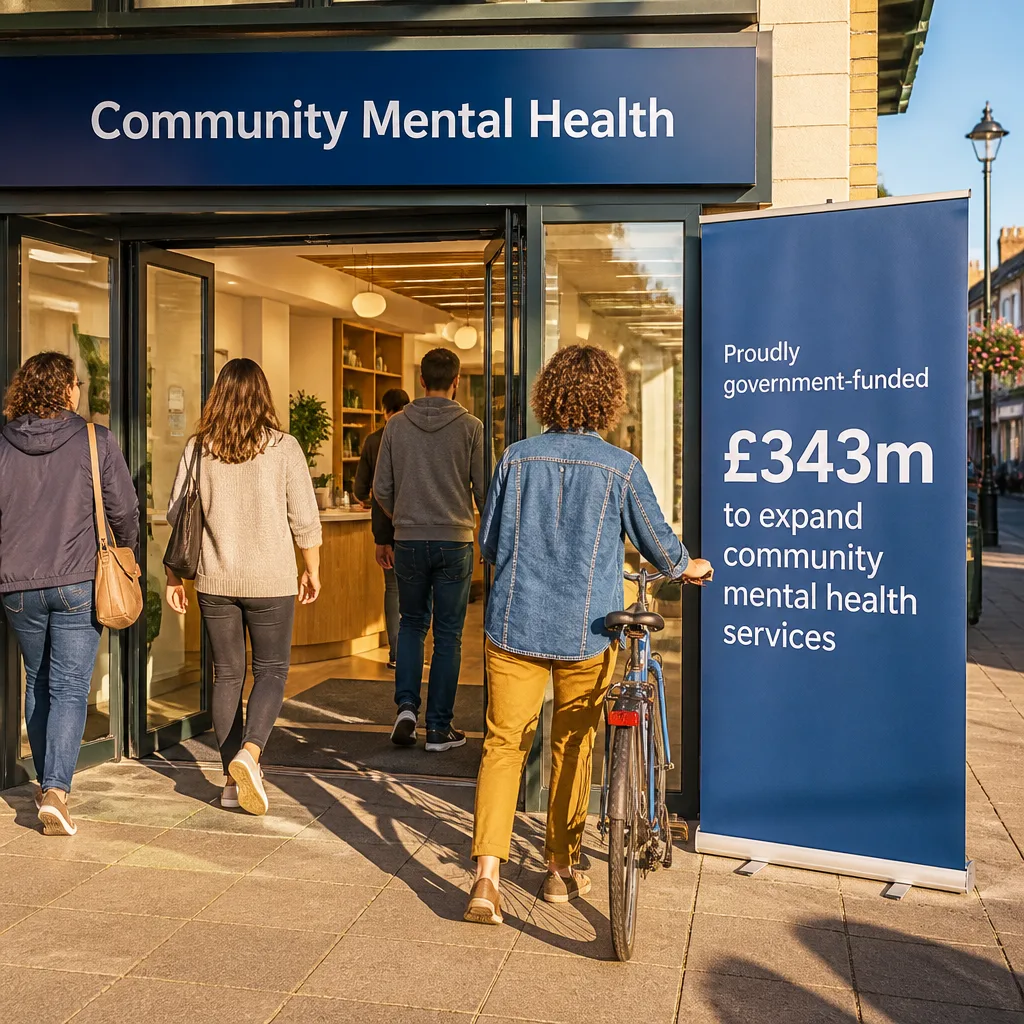
The NHS will launch a nationwide expansion of mental health services, with 159 new centres planned across England and supported by a £343 million investment, officials announced. The programme aims to bring urgent and early support closer to where people live, with the first sites due to open this autumn and further locations following from March 2027.
What is being introduced
The rollout comprises two distinct types of services: 100 community mental health centres offering walk-in support with no referral or long waits, and 59 mental health emergency departments designed to provide specialist crisis care outside hospital A&E settings. Some of the new facilities will be built as stand-alone sites, while others will be installed within existing community venues such as libraries, banks and high streets and intentionally designed to feel less clinical.
- 159 total centres across England
- £343m government funding
- 100 community walk-in centres
- 59 dedicated mental health emergency departments
- First openings in autumn 2026, further roll-out from March 2027
Officials said the expansion will more than double England’s current emergency mental health provision to 82 sites, reflecting an ambition to divert people in crisis away from general A&E departments into specialist environments better suited to their needs.
Why ministers and campaigners support the plan
Ministers argue the change will reduce waits, prevent deterioration in people’s mental health and ease pressure on busy emergency departments. The programme has been framed as part of a broader 10 Year Health Plan to strengthen community-based services and intervene earlier in the course of illness.
“By bringing together treatment and wider support services under one roof, these centres can transform experiences of care, helping people to access support earlier and preventing them from reaching crisis point,”
The comment above was made by a representative of Rethink Mental Illness, reflecting the view of voluntary sector organisations that integrating treatment with social and local support can improve outcomes and reduce avoidable crises.
Context and implications
The move responds to rising demand for mental health services. Officials pointed to high levels of common mental health conditions across the population and to lengthy waits for specialist input, which frequently leave people reliant on already over-stretched A&E departments.
Locating new services in everyday community settings aims to reduce stigma and increase accessibility, and local government leaders said close working between councils and health providers will be important for successful implementation. Councillors and local chairs have offered to engage with the government to help shape how centres operate in their areas.
Rolling out the programme will present logistical and workforce challenges. Delivering 159 sites in a relatively short timeframe requires staff recruitment and training, appropriate premises and clear referral pathways with existing services. The announcement does not set out detailed operational models for every site and local health systems will be tasked with adapting national plans to local needs.
For patients, the intended benefits are earlier access, fewer delays and care delivered in environments designed for mental health crises rather than general emergency departments. The policy also signals a continued shift in NHS strategy towards community-based support and prevention, rather than primarily hospital-based treatment.
Officials said the first tranche of centres will open from this autumn, with further openings from March 2027, forming part of the government’s wider decade-long health strategy.