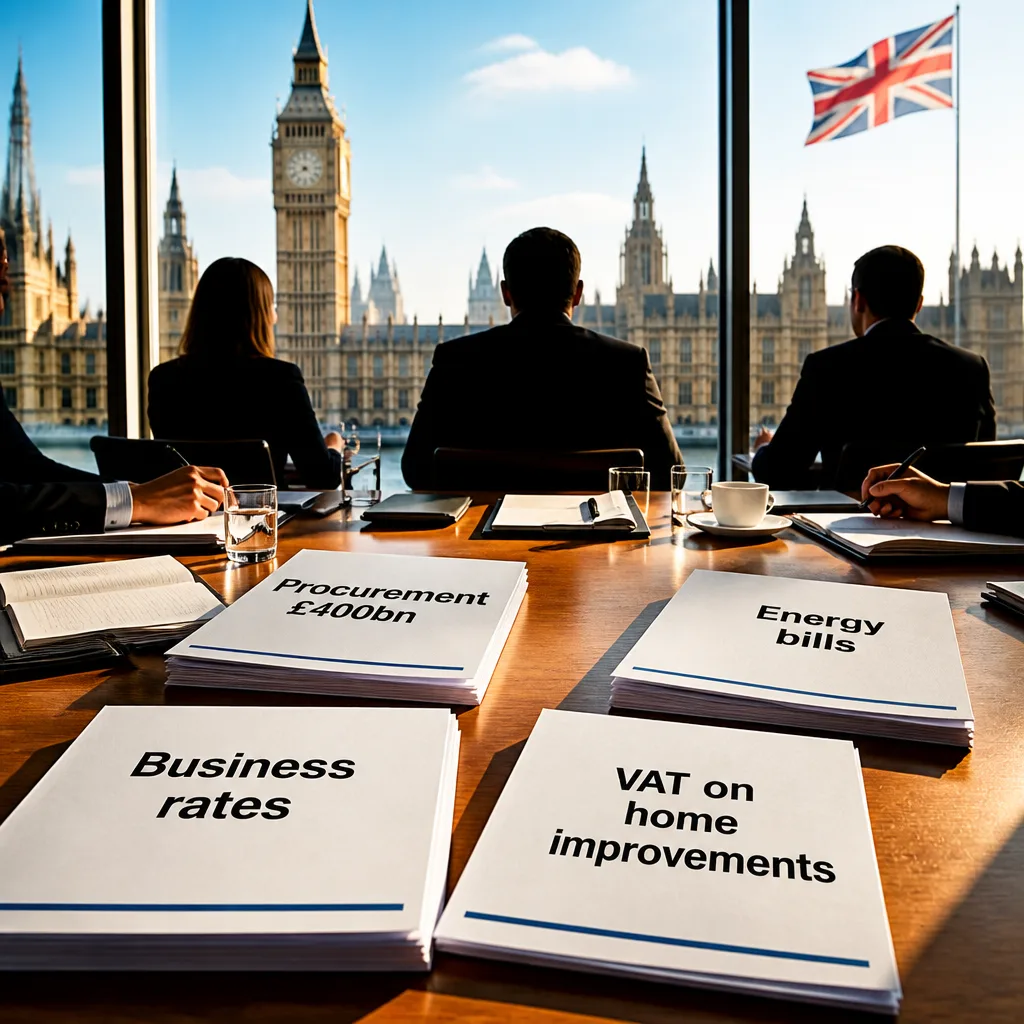
Chancellor John Healey has vowed that “every government department” will be “backing Britain” by steering public contracts to domestic suppliers. But senior figures across construction, motor trades and small business owners said the policy risks being little more than a slogan unless ministers first tackle pressing cost burdens such as business rates, VAT on home improvements and soaring energy bills.
‘Buying British’ must follow action on costs, industry says
In an interview published in The Sun on Sunday, the Chancellor said his administration would pursue a determined programme to ensure public procurement supports UK jobs, apprenticeships and skills. Public purchasing already represents a significant portion of state spending — roughly one-third of public expenditure, amounting to almost £400 billion last year — and ministers argue procurement is a lever to boost domestic industry.
“Buying British not if possible, but by design – so that every procurement pound supports British jobs, British apprenticeships and British skills.”
But owners and trade representatives spoken to by The Sun warned that procurement preferences alone will not address the affordability pressures that shape firms’ ability to compete for contracts or invest. Bricklayer and construction manager Ian Hodgkinson, who works in a sector estimated to add about £140 billion to the economy annually, said measures such as VAT relief for extensions and home improvements would do more to stimulate activity than procurement pledges.
- Construction: industry call for VAT cuts on home improvements to spur demand.
- Motor trade: garages and mechanics urging lower business rates to ease operating costs.
- SMEs and high-energy users: seeking targeted relief on energy bills and simplification of red tape.
Small firms worry about immediate cash pressures
Small-business owners described the procurement push as an attractive objective but one with delayed payoff, compared with immediate cost pressures that constrain hiring, investment and day-to-day survival. Garage owner Bilal Khan told The Sun he would like to see reductions in business rates to relieve the pressure on local mechanics and independent workshops.
Ministers will need to balance the political appeal of favouring home-grown suppliers with the practicalities of getting firms into a position to win and fulfil public contracts. That means addressing upfront costs, cashflow constraints and compliance burdens that disproportionately affect smaller suppliers and new entrants.
Numbers behind the debate
| Measure | Value cited |
|---|---|
| Public procurement (annual) | ~£400 billion |
| Construction sector contribution | £140 billion |
| Motor trade contribution | £25 billion |
Procurement reform can help channel demand towards domestic suppliers, but it does not directly reduce operating costs such as rents, rates, energy and payroll taxes. Trade bodies and individual operators argue that targeted tax and regulatory changes would be more effective in the near term at reviving capacity and competitiveness.
The debate also raises questions about how 'buy British' rules will interact with existing procurement law, public value-for-money obligations and the need to maintain competition and supply-chain resilience. Ministers will need to design measures that are legally robust and that avoid unintended distortions — for example, by favouring larger incumbents that can already absorb fixed costs rather than the small businesses the policy aims to help.
Healey’s pledge is likely to be welcomed by firms that win public contracts, but for many smaller companies the priority remains cutting the immediate burdens that dictate survival and the ability to scale. If the Government is serious about bolstering domestic supply chains, industry leaders say, it must pair procurement preferences with concrete relief on taxes, energy and bureaucratic barriers.
The coming months will show whether the Chancellor pairs the procurement drive with fiscal and regulatory measures that businesses say are essential to translate good intentions into higher output and jobs.