Major employer in Grimsby faces closure as Lenzing reshapes global operations
Lenzing, the Austrian textile group behind the Tencel brand, has announced plans to stop production at its Grimsby lyocell facility by the end of 2027 as part of a worldwide reorganisation. The move puts 215 local jobs at risk and could bring almost three decades of fibre manufacturing in the town to an end.
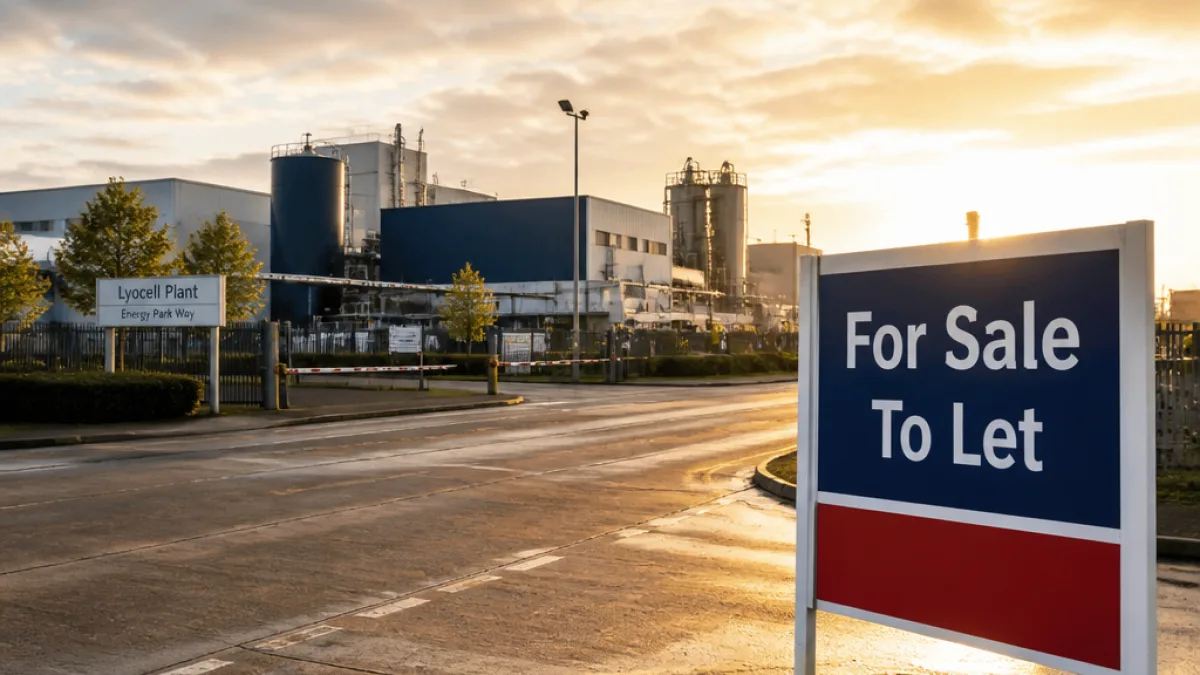
The plant, located on Energy Park Way, specialises in producing lyocell — a plant-based textile made from wood pulp that is widely used in the clothing industry under the Tencel name. The Grimsby site originally opened in 1998 under Courtaulds Fibers and has been part of the local industrial fabric ever since.
Lenzing said the decision forms part of a new strategy it has dubbed "Grow Nonwovens, Reset Textiles". The company is consolidating its fibre production footprint and is also progressing a sale process for an Indonesian viscose site, PT South Pacific Viscose. Production at other fibre plants, including Heiligenkreuz in Austria, is also scheduled to be phased out under the timetable the group has disclosed.
"As part of its transformation and product portfolio optimisation, Lenzing is consolidating its fiber production footprint..."
The company said it would explore "strategic options" for the Grimsby plant and other affected sites, including potential sale or other "value-preserving solutions". Those options will determine whether jobs can be saved through new ownership or alternative arrangements, but the announcement makes clear production is due to cease by the end of 2027 unless circumstances change.
- 215 employees currently work at the Grimsby plant;
- The facility has been manufacturing lyocell in Grimsby since 1998;
- Lenzing's strategy includes phasing out production at other fibre sites as part of a global reset.
| Item | Detail |
|---|---|
| Site | Grimsby lyocell plant, Energy Park Way |
| Workers at risk | 215 |
| Closure target | End of 2027 |
| Opened (as Courtaulds) | 1998 |
The announcement will be felt across the town. Grimsby has long been home to manufacturing and processing industries; losing a site that produces a high-value textile fibre is likely to have knock-on effects for local suppliers, contractors and the wider labour market. That said, Lenzing has explicitly left a door ajar by saying it will look for purchasers or other solutions that would preserve value.
For staff at the plant the statement will have been unwelcome news. The company has confirmed the number of employees on site and set a clear timeline for the planned phase-out. At this stage there are no firm details about consultations, redundancy programmes or support for workers — matters that will be central as the situation develops.
Local authorities, trade unions and community groups will be watching closely. If a sale cannot be secured, the closure would mark the end of almost 30 years of continuous lyocell manufacture in Grimsby — a heavy blow to a town already familiar with the churn of industrial change. If a buyer is found, some or all jobs could be preserved, but that remains an open question.
As ever with these corporate restructures, the practical outcomes will be decided over the coming months. For now, the clearest facts are the figures the company has released: a planned cessation of production by the end of 2027 and 215 roles in jeopardy. That is a tough pill for many Grimsby families and businesses to swallow, and it sets a stark agenda for discussions between the company, potential investors, local leaders and workers' representatives.
We'll be following developments closely and reporting any concrete proposals for the site, responses from unions and public officials, and details of any support packages for employees as they are announced.