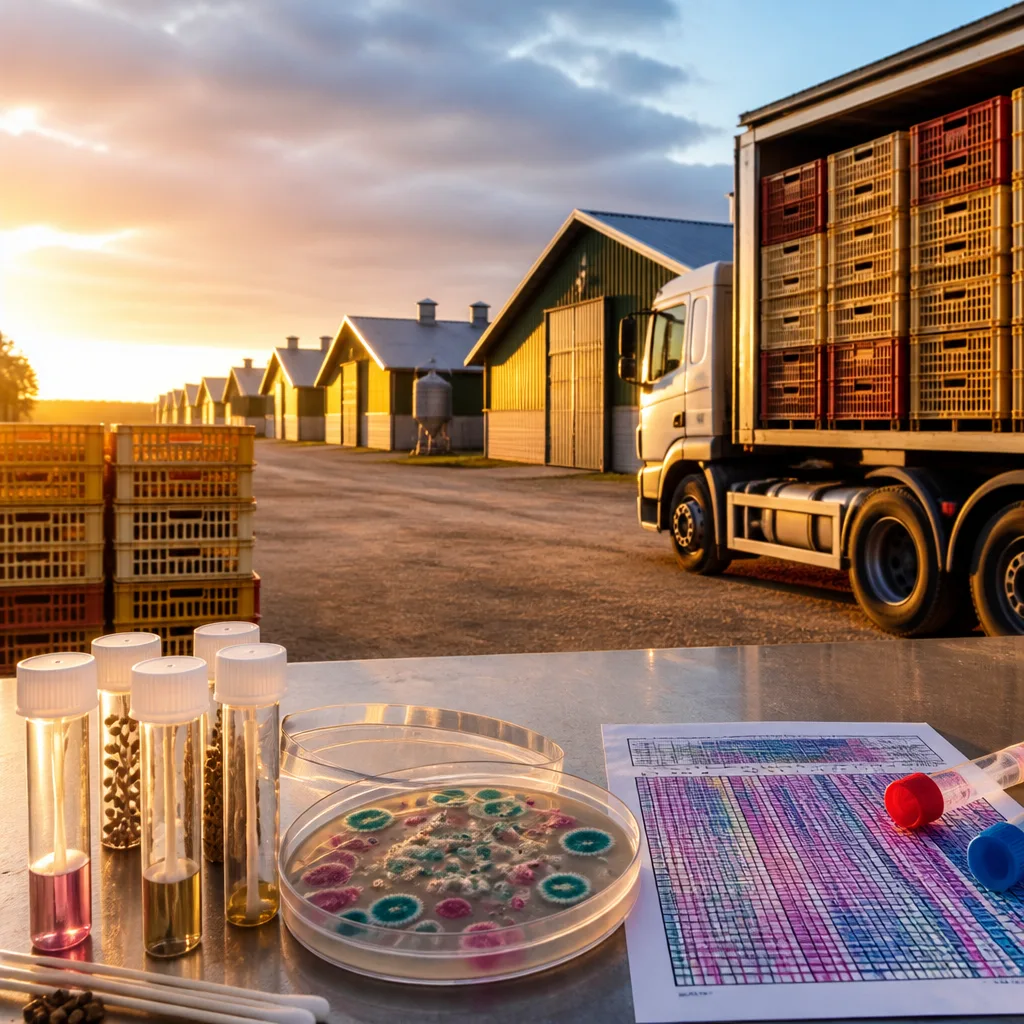
Industrial-scale chicken farming has dramatically boosted the spread and mixing of Campylobacter, the leading bacterial cause of food poisoning worldwide, according to new research from the Ineos Oxford Institute for antimicrobial research at the University of Oxford.
Genomic evidence of a farm-driven expansion
Analysing more than 2,700 bacterial genomes collected from chickens and wild birds across 30 countries between 1979 and 2024, researchers report that the global growth of poultry production has created ideal conditions for the bacterium to move between populations, exchange genetic material and acquire traits that aid survival in the farm environment.
Since the 1960s, the world’s chicken flock has expanded roughly sevenfold, rising to about 31 billion birds. The team notes that chickens now make up about 70% of all bird biomass on Earth — a scale that, while underpinning cheap protein production, also creates dense, interconnected host populations in which bacterial pathogens can flourish.
Public-health impact and antimicrobial resistance
Campylobacter remains the most common bacterial cause of foodborne illness. In the United Kingdom the bacterium is responsible for more than 3.5 times as many cases of gastroenteritis each year as all other monitored foodborne bacteria combined, the study highlights.
Genomic analyses identified genetic changes associated with adaptation to the chicken environment, including genes linked to antimicrobial resistance (AMR) and tolerance to oxidative stress. Experts expressed concern that rising rates of AMR are making Campylobacter infections harder to treat.
"ideal"
The research, published in the Proceedings of the National Academy of Sciences (PNAS), draws on work by the Ineos Oxford Institute and emphasises how modern farming systems have changed pathogen dynamics by allowing strains that once circulated mostly in wild birds to mix extensively within commercial poultry populations.
What the data show
Key facts and figures from the study:
- 2,700+ Campylobacter genomes analysed
- Samples from 30 countries, including the UK and United States
- Sampling timeframe: 1979–2024
- Global chicken population: about 31 billion birds
- Chickens constitute roughly 70% of bird biomass
| Metric | Value |
|---|---|
| Genomes analysed | 2,700+ |
| Sampling period | 1979–2024 |
| Estimated global chicken numbers | ~31 billion |
The authors point to the combination of high animal densities, repeated cycles of production and global trade in poultry as drivers that increase opportunities for Campylobacter to spread and evolve. Such mixing can accelerate the emergence and dissemination of antimicrobial-resistance genes among bacterial populations.
Consequences for consumers and policy
For consumers, the findings underline the continued importance of standard food-safety precautions when handling and preparing poultry, and the need for surveillance of resistant infections. At a policy level, the study feeds into broader debates about sustainable livestock production, biosecurity standards, and responsible antibiotic use in farming.
While intensification of chicken production has delivered affordable animal protein at scale, the authors caution that without strengthened measures to limit bacterial transmission and reduce selective pressures favouring resistant strains, the public-health costs may grow.
Further research is needed to translate genomic insights into targeted interventions on farms, in processing facilities and across supply chains to curb Campylobacter spread and to preserve the effectiveness of existing antimicrobials.
As policymakers and industry weigh the trade-offs between food security, affordability and health risks, this study provides comprehensive genomic evidence tying modern poultry systems to changes in a major human pathogen.