Will Ahmed, founder of fitness wearable company Whoop, has laid out a concise daily routine that places recovery and stress management at the heart of training decisions. His approach blends quantified health data with simple lifestyle habits — from early meditation to a substantial egg-based breakfast — aimed at sustaining performance across work, family and exercise.
Recovery scores set the exercise intensity
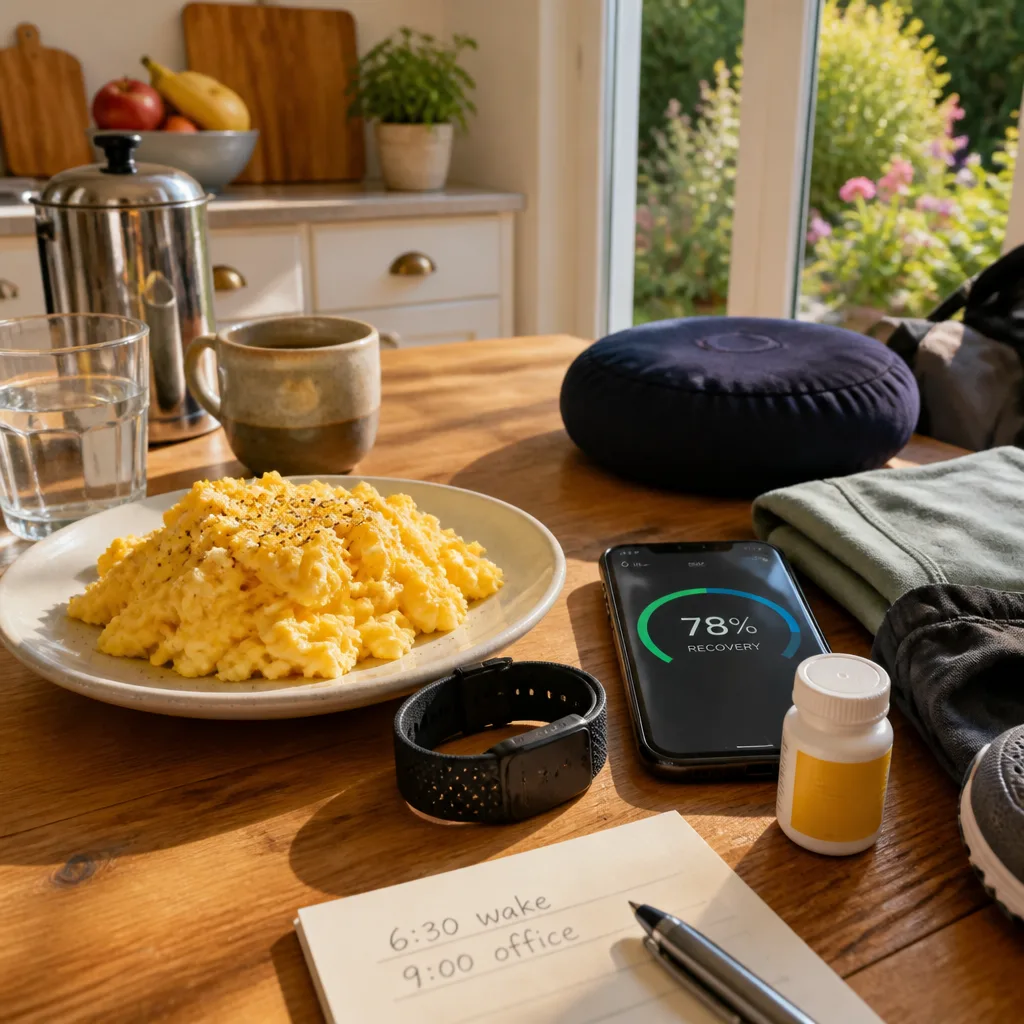
Ahmed says he typically rises at around 6.00–6.30am. He begins the day with meditation and often follows with a training session led by his trainer. Most training days are devoted to weightlifting for roughly an hour, but how hard he works depends on his Whoop recovery metrics. When recovery is high, he will undertake a heavy session; when recovery is lower, he will opt for lower-strain activity such as a long walk or a Barry’s Bootcamp class.
"I like to wake up at 6 or 6.30am. I’ll meditate first thing, then I’ll often work out with my trainer."
That reliance on data to guide training load is central to the Whoop philosophy and to Ahmed’s personal routine: he uses the device to monitor recovery and make day-to-day decisions about exercise intensity.
Food, supplements and sleep habits
Food choices are straightforward and repeatable. Ahmed describes a large breakfast focused on eggs — anywhere from three to eight depending on the day — with bacon and avocado, and fruit alongside. Lunch tends to be light and Mediterranean in style, typically a salad with protein, while dinner is a bigger meal of chicken or steak with rice and vegetables. He generally limits himself to three main meals a day and avoids snacking.
Ahmed also follows a tailored supplement routine informed by blood tests. He adjusts vitamin D seasonally — taking more in the Boston winter and less in the summer when levels rise — and varies other supplements according to test results.
He highlights the importance of timing food relative to bedtime, noting that eating close to sleep can impair both sleep quality and recovery. For caffeine, his intake is modest and routine: coffee twice daily, once on waking and once at midday.
Meditation, family time and work rhythm
Mindfulness is non-negotiable: Ahmed has practised daily meditation for around 12 years. He regards the habit as a fundamental tool for managing stress and mental fatigue, a brief pause that helps him refocus amid the demands of running a business.
Workwise, he aims to be in the office by about 9.00am. He balances his schedule so that if he leaves at 6.00pm he can see his son — who is around seven months old — before bed. When that window is missed, he may stay later in the office.
Practical takeaways
- Use objective recovery data to guide workout intensity rather than training through fatigue.
- Keep meals structured — three main meals, minimise snacking — and time evening eating to protect sleep quality.
- Build a short daily meditation or mindfulness practice to reduce stress and sharpen focus.
Ahmed’s routine sets out a model for combining technology, measured decision-making and simple daily rituals to support both high performance and family life. It demonstrates how wearable metrics can be used not just to push harder, but to decide when to rest — a lesson relevant to anyone balancing ambitious goals with long-term health.
| Time | Typical activity |
|---|---|
| 06:00–06:30 | Meditation, then workout with trainer (often weightlifting) |
| Morning | Large breakfast (eggs 3–8, bacon, avocado, fruit), coffee |
| 09:00 | In the office |
| Midday | Light lunch (Mediterranean-style salad, protein), second coffee |
| 18:00 | Home for dinner and family time (if possible) |
Ahmed’s account offers a practical blueprint rather than a one-size-fits-all regime: the underlying principle is to let objective recovery measures inform activity choices, while anchoring the day with consistent habits such as meditation and regular, protein-rich meals.