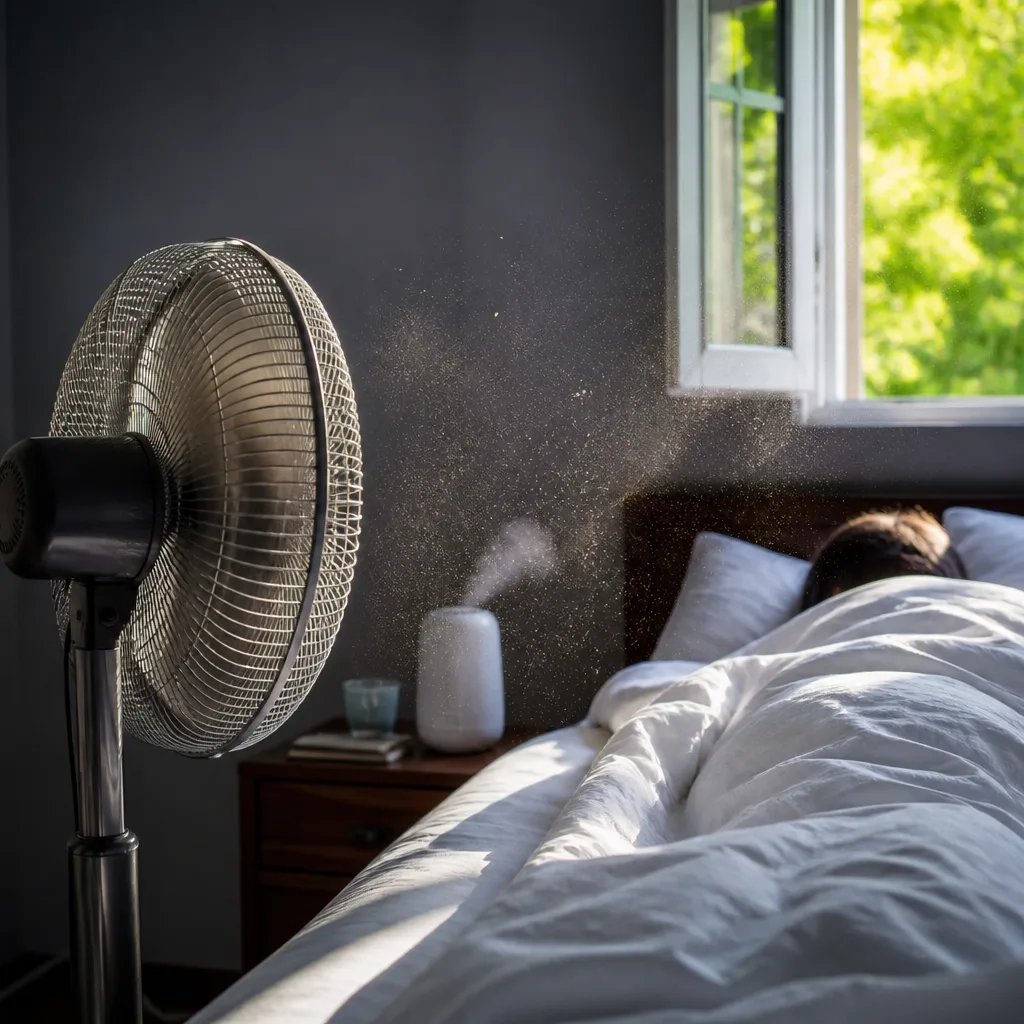
Using a fan through the night to beat the heat is a common solution during warm spells, but doctors warn it can have several unwanted effects on the body. Clinicians identify three main problems linked to prolonged direct airflow: increased exposure to allergens, localised muscle stiffness and nasal or throat congestion caused by drying of the mucous membranes.
How a fan can unsettle your airways
Experts highlight that fans circulate air — and anything carried in it. Dust settled on blades, pet dander and pollen can be swept back into the bedroom environment, which may aggravate hay fever or asthma. Dr William Lu, medical director at Dreem Health, explains the mechanism:
“If your airway is already reactive and sensitive, the combination of circulating allergens and dryness can make symptoms like coughing, wheezing, or congestion worse.”For people with pre-existing respiratory sensitivity, this combination of particles and drying effects can provoke notable discomfort and even breathing difficulties.
Stiffness and localised cooling: why you wake sore
Another frequently reported effect is waking with aches, commonly a stiff neck. Continuous cool air focused on a particular area can reduce local blood flow and cause muscles to tense or cramp during long periods of stillness in sleep. Clinicians note that this is more likely when a fan is aimed steadily at one part of the body rather than oscillating or being positioned to circulate air more evenly.
Dry mucous membranes and congestion
Constant airflow can dry the lining of the nose, mouth and throat. In response, the body may produce more mucus to protect and lubricate these surfaces, which paradoxically can lead to a feeling of congestion, a sore throat, coughing or sinus headaches. ENT specialists point out that the mucociliary apparatus — the tiny hairs and mucus that normally clear particles — can be affected when dryness and airborne particles are combined.
- Allergy and asthma triggers: recirculated dust, pollen and pet dander.
- Muscle stiffness: prolonged, focused cooling causing localised cramps or tension.
- Congestion and dryness: increased mucus production and irritation of nose, throat and sinuses.
Practical tips to reduce risk
Physicians recommend straightforward adjustments that preserve the cooling benefits of a fan while lowering adverse effects. Suggestions include ensuring the fan is oscillating rather than fixed on the face, cleaning blades regularly to limit dust reintroduction, and avoiding a direct blast of cold air onto one body part for extended periods. These measures can help keep the bedroom cooler without unduly disturbing the respiratory tract or causing muscle discomfort.
| Problem | Cause | Simple remedy |
|---|---|---|
| Allergy/asthma flare-ups | Stirred dust and pollen | Clean fan blades; use oscillation |
| Stiff muscles | Concentrated airflow | Redirect airflow; change sleep position |
| Congestion/dry throat | Drying of mucous membranes | Humidify room; avoid direct airflow |
For many sleepers a fan provides the most comfortable middle ground between heat and cold, especially when air conditioning is not desirable because of dryness or energy use. With modest changes to how the appliance is used, most people can retain its cooling benefits while reducing the likelihood of the side effects physicians describe.
Those with diagnosed respiratory conditions should be particularly cautious; if symptoms persist or worsen, clinicians advise seeking personalised medical guidance rather than relying on general measures.
Used thoughtfully, a fan remains an effective, low-cost way to manage warm nights — but awareness and small adjustments can prevent it becoming a source of irritation or discomfort.