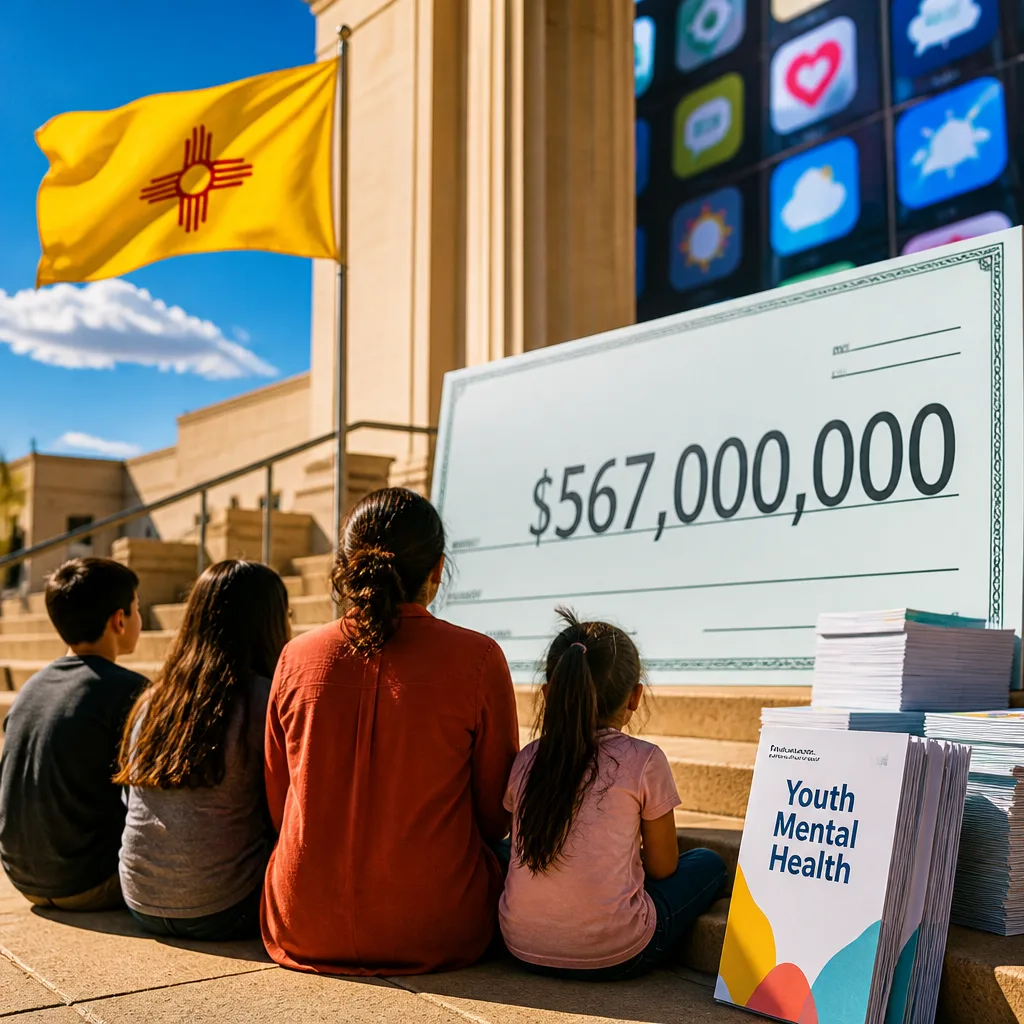
A New Mexico court has ordered Meta, the owner of Facebook and Instagram, to pay $567 million into a fund to help repair harms to children’s mental health caused by its platforms. The payment follows a landmark trial that found the company knowingly endangered young users and failed to address child sexual exploitation on its sites.
Financial penalties and how the money will be used
The latest judgement forms the second phase of litigation which began after a jury in March held the company responsible for causing psychological harm to minors and imposed a maximum statutory fine of $375 million. With the new order, Meta’s total financial liability in the case rises to $942 million.
| Amount | Purpose |
|---|---|
| $420m | Treatment services for young people in New Mexico |
| $147m | Awareness, prevention, screening and other costs over five years |
The court specified that the majority — $420 million — should be allocated to clinical and therapeutic services for children and adolescents within New Mexico. The balance will fund prevention and screening programmes, awareness campaigns and administrative expenses over a five-year period.
Operational changes ordered by the court
Beyond compensation, the judge directed the company to adopt a set of measures aimed at reducing risks to young users. These include:
- Creating banner and information screens on Facebook and Instagram that explain protection features and best practice for young users and parents;
- Running an educational campaign in New Mexico subject to state review;
- Other oversight and transparency measures intended to make harmful content and tools to address it more visible.
The court also recognised legal constraints on some remedies. It noted that US federal children’s privacy statutes prevent forcing age-verification for children under 13 and that requiring Meta alone to verify ages, while exempting other platforms, would be inequitable and unduly punitive.
Context and wider consequences
The March trial marked the first time a US court found Meta civilly liable for wrongdoing committed on its platforms. The proceedings followed investigative reporting in 2023 which exposed how Facebook and Instagram were being used in the trafficking and exploitation of children. Testimony from former content moderators was central to the case: some said they flagged material linked to child grooming that was not escalated for further action.
Prosecutors had sought more far-reaching structural changes during the second phase of the case, including limits on features assessed as addictive, stronger age checks across the service and default privacy protections for minors. While the judge ordered several transparency and educational steps, the court stopped short of imposing unilateral age-verification requirements, citing statutory limits and fairness concerns.
Legal analysts and child protection advocates are likely to scrutinise the practical impact of the new measures. The funding for treatment and prevention may bolster services for affected young people in New Mexico, but critics have already emphasised the need for national and cross-platform approaches if harms linked to social media are to be reduced at scale.
Industry groups will also watch closely for how the judge’s reasoning might influence future litigation and regulation. The case establishes a precedent for civil liability tied to platform design and content moderation choices, and the mix of monetary penalties and ordered corporate changes could inform similar actions in other states or countries.
For clinicians and public health professionals, the ruling highlights two persistent challenges: identifying and treating mental health harms related to online exposure, and developing preventive interventions that can be implemented across rapidly evolving digital services.