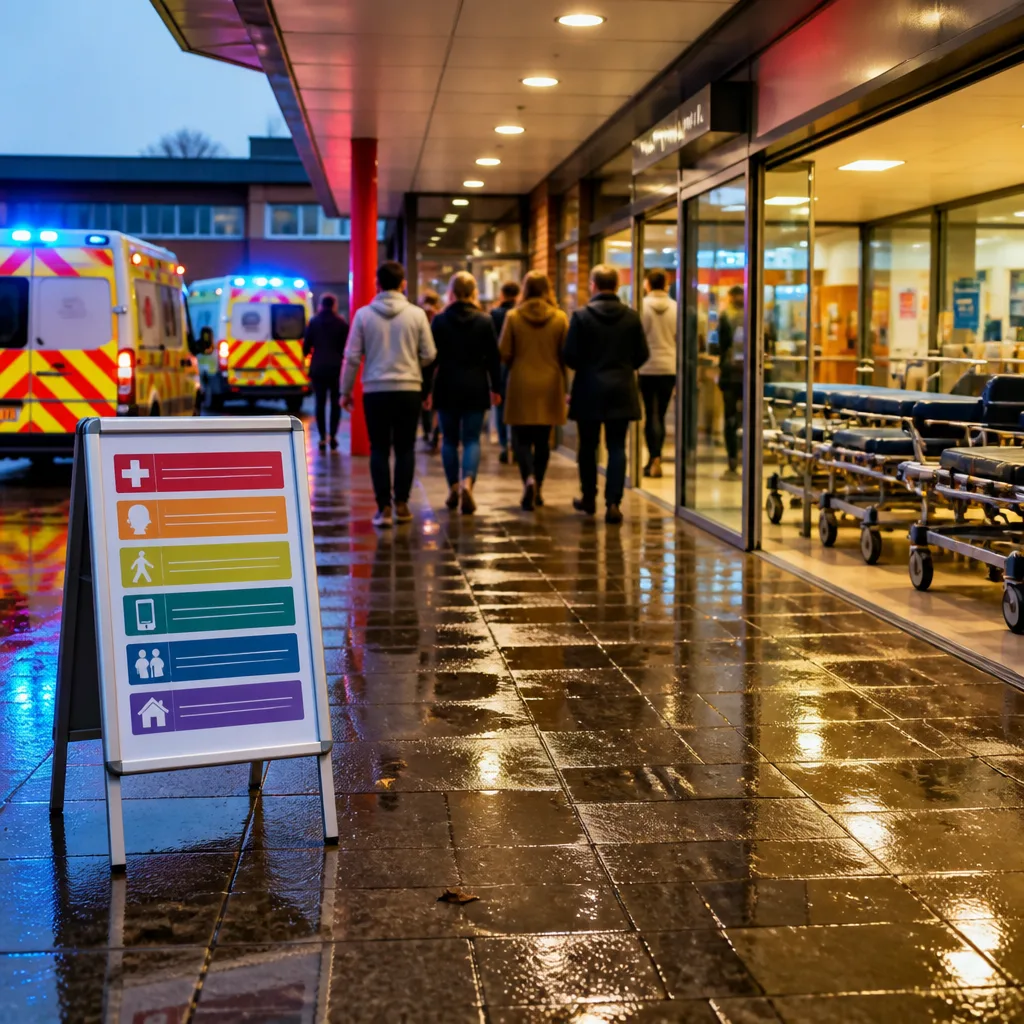
NHS Borders has said the emergency department at Borders General Hospital, near Melrose, is under “significant pressure” and currently “exceptionally busy”. The board warned of high attendances and a number of people waiting to be admitted, and urged the public to attend A&E only for life‑threatening emergencies.
Current situation and public advice
The health board said patients may face longer waits than usual and encouraged those with non‑urgent concerns to seek care elsewhere. It listed a range of alternatives intended to reduce demand on the emergency department while ensuring people receive appropriate care.
- Use NHS Inform self‑help guides for common conditions and symptom advice.
- Visit community pharmacies for minor ailments and medication advice.
- Contact NHS 24 for telephone triage and guidance.
- Attend the walk‑in clinic at Hawick Community Hospital if registered with the Teviot and Mairches practices or Selkirk Medical Practice.
“If your family member is fit to be discharged from hospital, you can help by being available to collect them or support their move to their next place of care,” the health board said.
Why discharge and flow matter
The appeal to families to support discharges reflects how bed flow affects the ability of hospitals to accept new patients. When people who are medically ready to leave cannot return home or move to a suitable next stage of care, beds are occupied longer than necessary, which in turn can increase waiting times in emergency departments and for those needing admission.
By asking relatives to be available to collect patients or to help facilitate moves to the next place of care, the board is aiming to improve throughput so that inpatient and emergency capacity can be used for those who require it most.
Consequences and local provisions
Extended waits in emergency departments can have several consequences: delays in assessment and treatment for incoming patients, increased pressure on staff, and potential diversion of ambulances. NHS Borders emphasised the importance of directing non‑urgent cases to more appropriate services so the emergency department can focus on critical care.
Local provisions cited by the board include the Hawick walk‑in clinic, which is available to patients registered with specified local practices. The board also reiterated national resources such as NHS Inform and NHS 24 for advice and triage.
| Service | When to use |
|---|---|
| NHS Inform | Self‑care guidance and symptom checks for minor conditions |
| Community pharmacies | Treatment and advice for minor ailments and medication queries |
| NHS 24 | Telephone triage and urgent health advice out of hours |
| Hawick walk‑in clinic | Same‑day care for patients registered with named local GP practices |
Context and wider implications
Emergency departments across the UK periodically experience surges in demand, driven by seasonal illness, delayed discharges, and spikes in attendances for non‑urgent problems. While NHS Borders did not publish numerical data with this warning, the language used — “exceptionally busy” and “significant pressure” — signals strain on local urgent care capacity.
Advice to reserve A&E for life‑threatening emergencies is a standard public‑health measure when departments are under pressure. It is intended to balance patient safety and ensure critical resources are available for those in most urgent need. The board closed its statement by thanking the public for their understanding and co‑operation.
“Thank you for your understanding and co‑operation,” the health board added.
Patients seeking care should check the most appropriate local service before attending A&E. Using community and remote services where suitable can reduce pressure on emergency departments and help maintain timely care for seriously ill patients.