The column lays out a future in which, from 2026, all UK land was placed under public stewardship and managed by Regional Mayors, guided by statutory Growth Plans and spatial strategies intended to redistribute economic activity, improve environmental quality and steer development.
Policy architecture: stewardship, spatial plans and placemaking
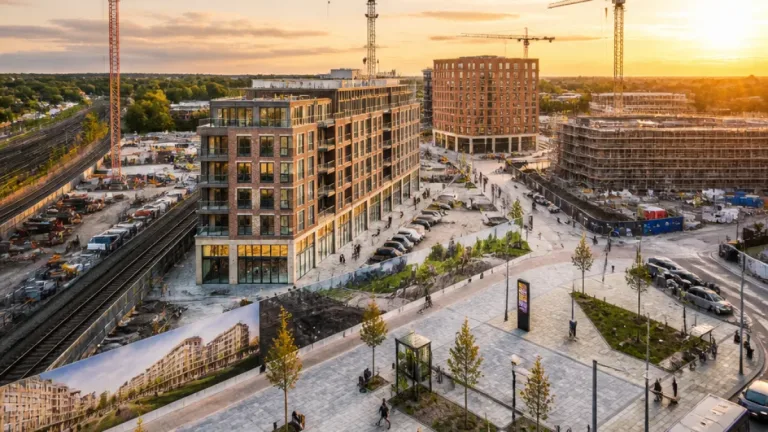
Under the scenario, each region produces a Spatial Plan that specifies how land should be used — housing, green energy, jobs or recreation — prioritising what the author calls placemaking or ‘place‑enhancing’ approaches. The plans are described as aiming to create a network of compact, interconnected towns and cities embedded within managed green infrastructure focused on aesthetics, food production and biodiversity.
The piece argues that this model, initially attacked by critics as akin to communism, gains acceptance by promising a clearer vision for development, reduced inequality and lower waste. It also envisages a redistribution of returns from private enterprise to the public purse, with profits from commercial activity shared to support wider social goals — a detail presented as central to making the approach politically and economically sustainable.
Transport-led regeneration in the Solent corridor
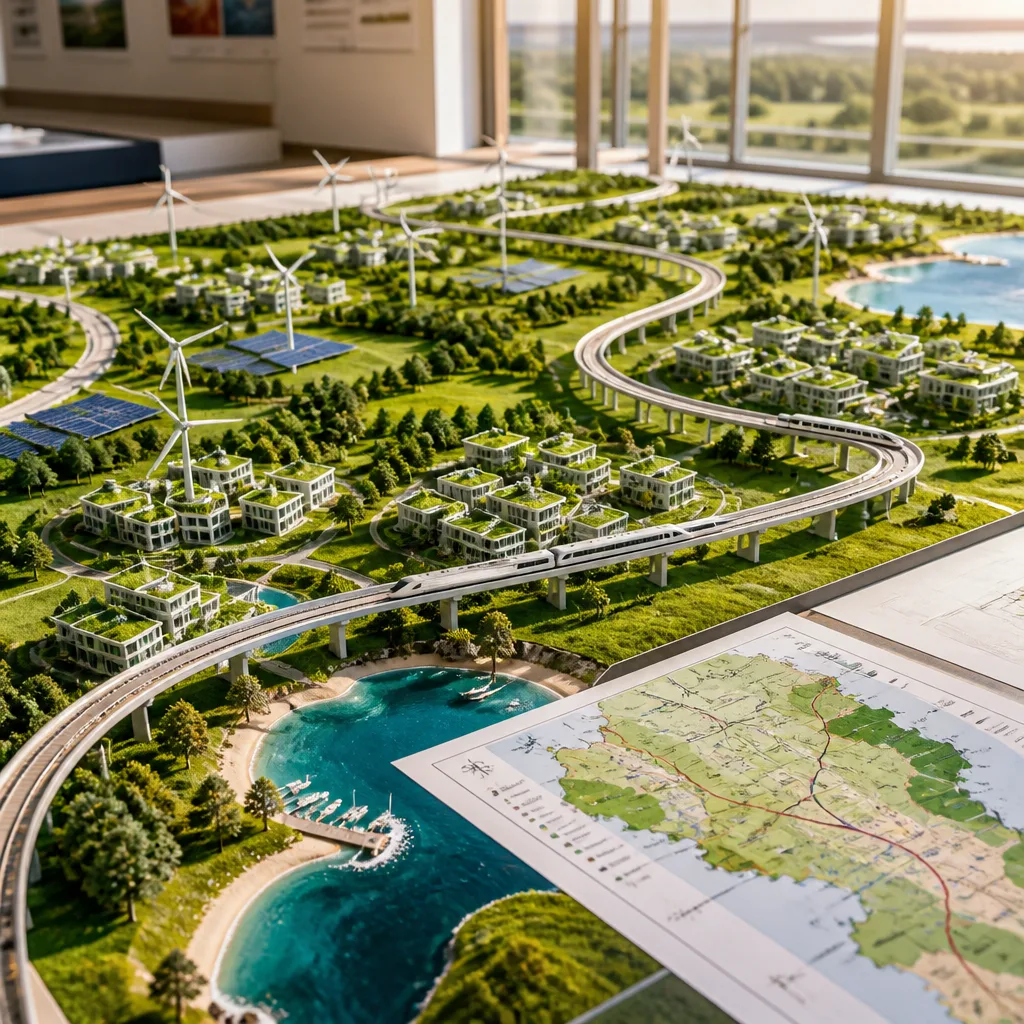
A concrete illustration in the column is the Solent region where a new strategic, multi‑modal route is proposed to run between Dorchester and Brighton, integrating existing urban areas and creating new growth nodes. The route would link or improve connections with Southampton, Eastleigh, Fareham, Portsmouth and Chichester.
New compact settlements are cited at Bovington, Horndean and Barnham, designed for high‑speed travel using driverless trains and taxis. The transport spine — labelled the CeSo Line — is credited with converting previously isolated economic pockets into dynamic clusters of engineering, culture, sport and education, by enabling rapid movement of people and ideas.
| Element | Example |
|---|---|
| Strategic route | Dorchester — Brighton |
| Linked cities | Southampton, Eastleigh, Fareham, Portsmouth, Chichester |
| New settlements | Bovington, Horndean, Barnham |
| Transport concept | CeSo Line; driverless taxis and trains |
Urban form, the environment and economic opportunity
The imagined settlements favour a gentle density with mid‑height buildings rather than sprawling suburbs. Parking is no longer the primary determinant of urban design because smaller driverless pods reduce private car ownership and free up land for productive or green uses. Between the built-up areas, the column foresees extensive nature regeneration, a return to organic farming on parts of the landscape and a network of green corridors intended to boost biodiversity and public amenity.
Economically, the scenario expects entrepreneurship to thrive under these conditions, with investment drawn by efficient high‑speed links and clustered activities. The author claims that profits would be shared with the public purse, on the basis that public stewardship of land creates fertile conditions for investment while delivering social returns.
Trade‑offs and implications for policy and business
The proposition raises evident trade‑offs for policymakers and firms. Public stewardship of land and partial redistribution of business profits would alter incentives for private developers and investors. Businesses may welcome better planned infrastructure and denser labour markets but would need clarity on revenue sharing, tenure and planning certainty. Transport investments such as the CeSo Line would require substantial capital, regulatory change for driverless systems and a long lead time before expected agglomeration benefits materialise.
For firms and investors watching the idea, the column offers a blueprint rather than an immediately actionable plan. Its value to the national debate lies in reframing land, transport and placemaking as interconnected levers for regional economic policy rather than separate issues to be addressed in isolation.
Whether such a model would be politically deliverable or economically efficient is left open in the piece, but it sets out a clear ambition: use coordinated regional planning and transformative transport to shape where growth happens, how communities look and how economic returns are distributed.