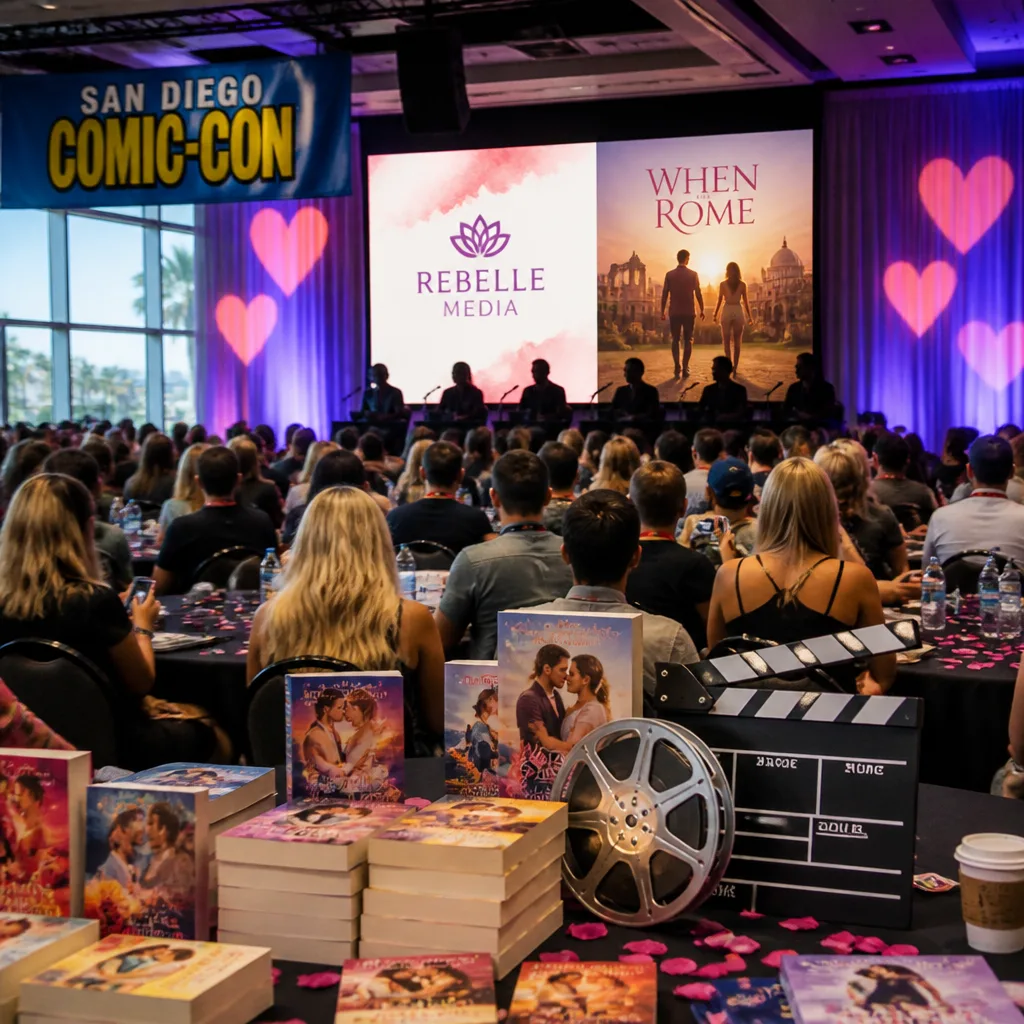
Romance is being treated as serious business again, according to authors and producers who gathered at San Diego Comic-Con to argue that the genre’s audience has been underserved on screen despite its long-standing dominance in publishing.
Industry reassessment at Comic-Con
Moderated by Veronica Roth, the panel titled “Romance: On the Big Screen: Why It’s About Damn Time” brought together bestselling novelists and studio executives to discuss why romantic stories are seeing renewed interest in film and television development. The discussion emphasised that the appetite for romantic narratives in publishing remains substantial — and that screen adaptations are finally catching up.
Speakers included the author duo Christina Hobbs and Lauren Billings (known collectively as Christina Lauren), Ali Hazelwood (author of The Love Hypothesis and Love, Theoretically), Maurene Goo (One and Only), and executives Max Siemers of Magic Hour Entertainment alongside Laura Lewis and Amanda Palley of Rebelle Media.
Demand vs supply: a perceived shortfall on screen
Panelists detailed a gap between the genre’s popularity in print and its visibility in theatrical distribution. Laura Lewis of Rebelle Media highlighted a long-term decline in romance films reaching cinemas, arguing that the audience has not vanished even if studios largely retreated from the category.
"Romance onscreen has, and when I say onscreen, I'm talking about the theatrical screen, has dropped over 75% the last 20 years,"
The remark underlined a central theme of the conversation: producers and authors want to reclaim the kind of mainstream rom-coms and romantic dramas that were once staples of cinema, citing inspirations such as the work of Richard Curtis, Nancy Meyers and Nora Ephron.
Specificity and representation as creative strategy
Writers on the panel were vocal about avoiding formulaic approaches. The consensus was that specificity — the particularities of setting, character detail and cultural nuance — is what fans of the genre prize, whether they are reading novels or watching screen adaptations. Lauren Billings argued that romance as a category is distinctive for its diversity and the prominence of women creators.
- Genre composition: Many contemporary romance novels are written by women and appeal strongly to female audiences.
- Diversity and inclusion: Panelists said romance embraces queer stories and multiple cultural perspectives, which should be preserved in adaptations.
- Creative approach: Specifics and character detail were proposed as antidotes to bland or formulaic screen versions.
Those points reflect a shift in how producers approach source material: rather than flattening novels into generic beats, the panel urged preserving the elements that make each book resonate with its readership.
Deal news and development priorities
In a notable development at the event, Rebelle Media revealed it has added Sarah Adams’ When in Rome series to its development slate. The announcement signals active acquisition strategies by companies aiming to mine popular romance novels for film and television projects.
| Panel moderator | Veronica Roth |
|---|---|
| Authors | Christina Hobbs & Lauren Billings; Ali Hazelwood; Maurene Goo |
| Executives | Max Siemers (Magic Hour); Laura Lewis & Amanda Palley (Rebelle Media) |
| New acquisition | When in Rome series by Sarah Adams (Rebelle Media) |
The deal underscores a wider industry appetite for existing intellectual property with built-in audiences — a pragmatic response to the commercial certainty romance titles can offer.
For British film and television observers, the conversation holds local resonance. Producers and broadcasters in the UK have also leaned into romantic drama and comedy, and the panel’s emphasis on authenticity, representation and preserving authors’ tonal signatures will be central to how future adaptations are shaped and received by audiences.
As the industry looks to rebuild a theatrical presence for romance, the message from Comic-Con was clear: the readers have always been there, and the onus is on creators and studios to give them the faithful, vivid screen stories they want.