Council admits delivery fell short despite full grant spend
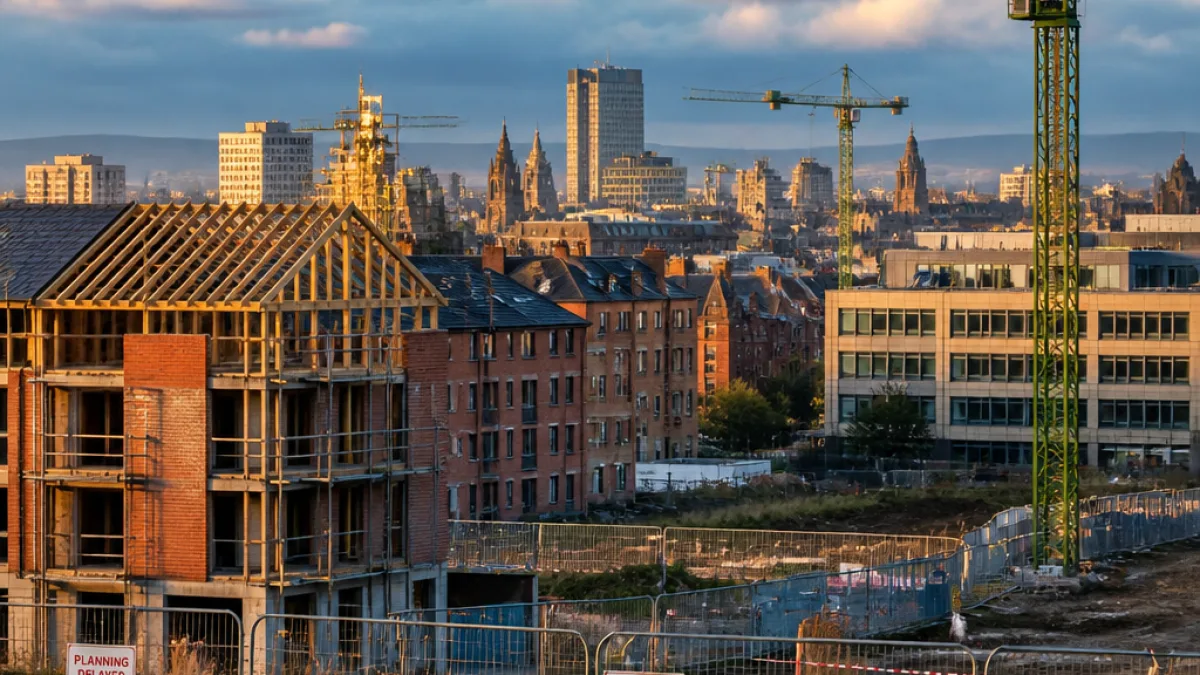
Glasgow City Council has recorded a sizable shortfall in the delivery of new affordable homes for 2025/26, according to a report to the authority's city administration committee. Although the Scottish Government provided £127.75m for the city's affordable housing supply programme and all of that money was allocated, only 448 homes were recorded as complete against a target of 633.
The council said other milestones were missed too: approvals and site-start figures fell behind the ambitions set for the year. Council reports show the authority secured approval for 557 homes when it had aimed for 921, and there were 947 site starts against a target of 1,271.
| Metric | Target 2025/26 | Actual 2025/26 |
|---|---|---|
| Completions | 633 | 448 |
| Approvals | 921 | 557 |
| Site starts | 1,271 | 947 |
Council sets more ambitious target for next year
Despite the missed targets, the report notes that over a broader timescale Glasgow has delivered substantially more new-build affordable homes than many other major UK cities. Between 2019/20 and 2025/26 the city recorded 4,249 completions, compared with 3,362 in Birmingham and 2,769 in Manchester.
New objectives for 2026/27 set out in the report aim higher: the council is now seeking to complete more than 1,000 new affordable homes in the coming year, and councillors will be asked to accept a further Scottish Government grant of £123.2m at an upcoming meeting.
Reasons for the shortfall
The council attributes the missed milestones to a combination of pressures that have lengthened delivery timetables and pushed activity into the next financial year. Key factors cited include:
- Rising construction costs, which have affected viability and extended planning and procurement phases.
- Delays securing site acquisitions and necessary consents.
- The way completions are recorded: homes are only counted when an entire development is finished, meaning some residents moving into new properties are not reflected in the year’s completion total.
"Despite declaring a housing emergency, the landscape for delivering affordable housing has not become any easier," said Councillor Ruairi Kelly, the city convener for housing. "We continue to deal with rising costs which mean that bringing them closer to benchmark can take longer in the planning phase and push approvals into the next year."
The report stresses the complexity of the issues behind delayed projects: several schemes were not approved or started on the planned programme because of the combination of elevated costs, grant-rate negotiations and extended legal or planning processes.
Local impact and political context
Glasgow declared a housing emergency in 2023 and delivery of affordable homes has been a central plank of the city's response. The shortfall in the single year will place pressure on both council officers and elected members to accelerate progress, particularly given the high number of households in need of genuinely affordable housing across the city.
Council leaders say they will press ahead with the revised 2026/27 programme and the additional grant funding. The figures in the report highlight the gulf that still exists between national funding commitments and on-the-ground delivery, and point to the operational challenges of translating large capital grants into completed homes within single financial years.
For Glaswegians watching neighbourhood developments, the implications are immediate: some planned schemes will take longer to reach completion, while others may require adjustments to scheme design, procurement or subsidy levels to restore viability in the face of continuing construction inflation.