The Falkirk Member of Parliament has called for devolution to be refocused so that power is exercised closer to communities, warning that decades of centralised decision-making have left local councils managing decline rather than driving renewal.
Local action, local accountability
Speaking about Scotland's constitutional debate, the MP said the discussion has often narrowed to a contest about who to blame — Edinburgh or Westminster — when what matters to Falkirk residents is whether their town centre is attractive, whether young people can find rewarding work, and whether families can afford to travel or feel stuck.
"Power is not an abstract debate."
Those practical concerns, the MP argued, do not map neatly onto arguments for a new state. Instead, they require clearer decisions about which level of government is best placed to act and greater freedom for local authorities to respond to community priorities after years of shrinking council budgets.
Critique of SNP centralisation
The MP criticised the Scottish National Party's framing that Scotland's problems stem exclusively from Westminster. He said concentrating more powers in Edinburgh would not, by itself, deliver stronger local democracy or more accountable public services. The point was illustrated by examples he suggested would not be fixed merely by who sits in Holyrood: teachers waiting years for permanent posts, parents worried about cuts to their children's learning time, and commercial drivers coping with what he described as a crumbling road network.
Instead, the MP advanced an approach he said was closer to the one set out by Prime Minister Andy Burnham: take decisions at the most effective level and as close as possible to the people affected. He urged the Scottish Government to adopt that method rather than return to what he described as "nationalist sloganeering."
Implications for Falkirk council and residents
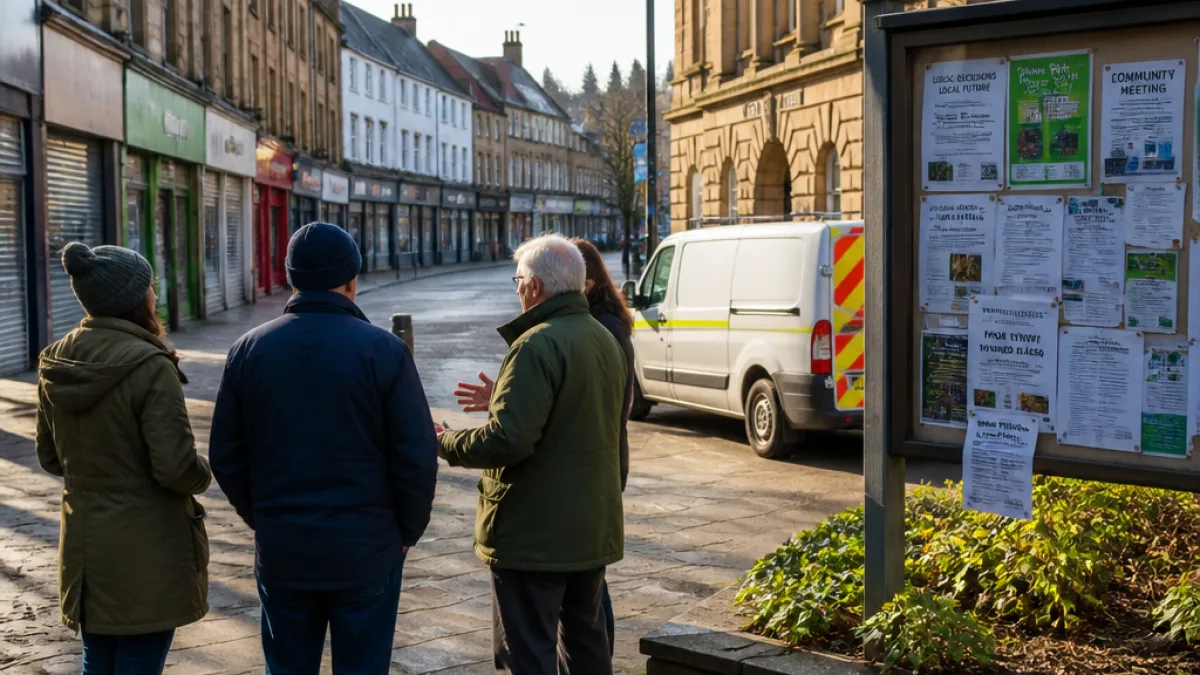
The argument has immediate implications for Falkirk. Local government in the area has faced funding pressures in recent years, and councillors have repeatedly warned that constrained budgets limit their capacity to invest in town centres, roads and youth services. If the MP's prescriptions were followed, councils would need greater flexibility over spending, planning and delivery of local services, but also stronger mechanisms for local accountability so residents can see who is responsible for decisions.
- Local control: Decisions taken closer to communities could allow Falkirk to set priorities for town centre regeneration.
- Accountability: Shifting responsibility to local bodies would need clearer lines of scrutiny so residents know who to hold to account.
- Funding pressures: Councils will require sufficient resources to translate extra powers into tangible improvements.
Questions that remain
While the MP rejects the notion that a new state apparatus is the automatic solution to local problems, the proposal leaves open practical questions. How would extra freedoms for councils be designed and funded? What safeguards would ensure consistent standards across Scotland? And crucially for Falkirk, how would local voices be amplified so that community priorities shape the use of any new powers?
Those are issues local councillors and civic groups in Falkirk will be watching closely. The debate over devolution is likely to shift from constitutional slogans to the mechanics of governance if the MP's intervention gains traction — but any realignment will require political choices, not just a change in where authority nominally sits.
| Decision-making level | Role suggested by MP |
|---|---|
| Local councils | Greater freedom to respond to community priorities |
| Scottish Government (Holyrood) | Should embrace subsidiarity rather than centralising more functions |
| UK Government (Westminster) | Not solely to blame for local problems; some issues require local solutions |
As the constitutional debate continues to dominate Scottish politics, Falkirk residents face concrete choices about how best to secure investment, services and a stronger voice for their communities. The MP's plea for devolved power that favours towns and villages over party platforms places those choices at the centre of local political discourse.