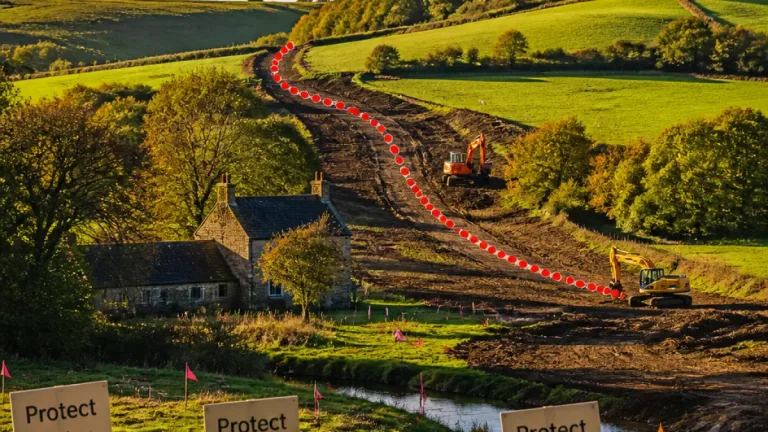
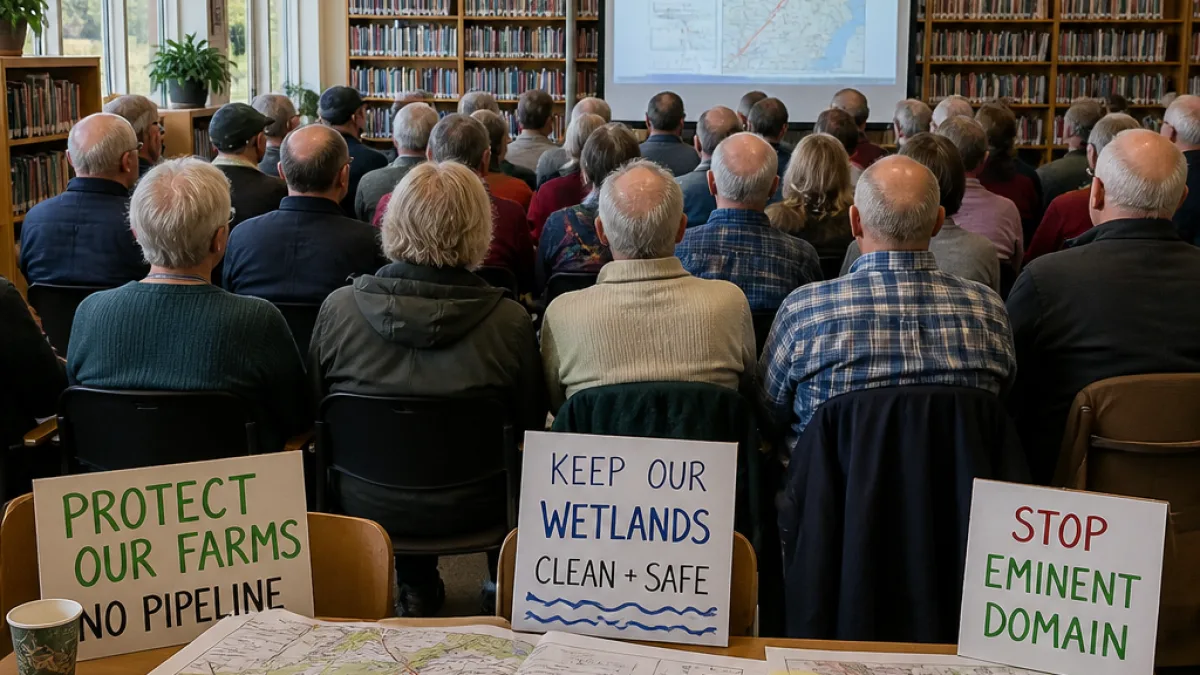
Landowners across Chatham County have organised in growing numbers to oppose a proposed natural gas pipeline that would run roughly 28 miles from Siler City to Moncure, according to local residents and community groups.
Concerns over routing, surveys and local impacts
Enbridge has proposed a 12-inch transmission line and has surveyed about 200 landowners in the area. Company representatives have been assigned to discuss routing and property concerns with those landowners, the firm has said.
But for many property owners the consultation process has generated more uncertainty than reassurance. Eileen and James Gunipero say they received a letter on 16 April from Enbridge Gas North Carolina indicating the company planned to survey their 22-acre property as part of the project. The couple have since joined hundreds of Chatham County residents opposing the scheme.
Residents report different maps circulating in the community and say that months after the first surveys they still do not know whether the proposed route would cross their land or disturb wetlands, farms or locations of cultural significance. That uncertainty has prompted public meetings and visible protest on private property.
“We’re almost always kept in the dark, and it causes anxiety,”
— Eileen Gunipero, as reported by The News & Observer.
Community meeting and organising
On 17 July, about 40 people gathered at the Chatham Community Library in Pittsboro for a session hosted by the Haw River Assembly. The environmental group used the meeting to explain permitting requirements and to outline strategies for opposing the project, including raising awareness of eminent domain laws.
Emily Sutton, executive director of the Haw River Assembly, told the audience the group would coordinate efforts to stop the pipeline. Attendees discussed next steps for collective action and shared practical concerns about how the route could affect farming operations and sensitive land.
Public opposition and local protest
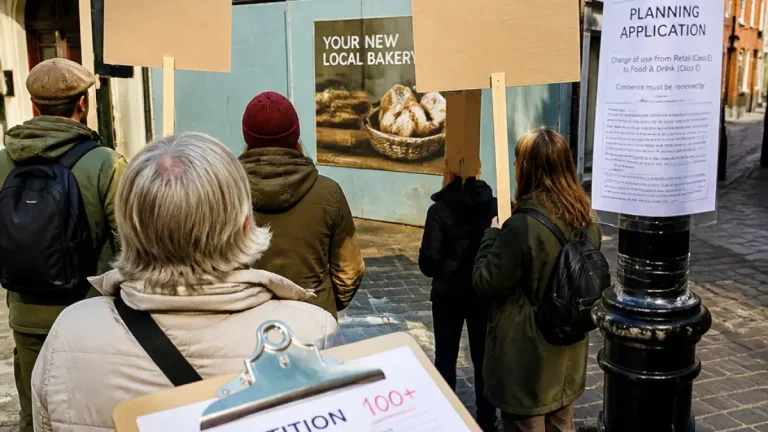
Visible signs of dissent have appeared on local properties. Dorasue Christian has posted signs opposing the pipeline along the border of her 22-acre farm near Moncure, signalling a readiness among some landowners to contest the proposal publicly.
The opposition is not only about immediate property access. At the library meeting, some attendees linked the pipeline proposal to a proposed data centre in the region, which they say is one of the factors driving demand for increased gas infrastructure.
- Project scope: 28 miles, 12-inch natural gas pipeline from Siler City to Moncure.
- Landowner contact: roughly 200 landowners surveyed; each assigned an agent by Enbridge.
- Local mobilisation: about 40 residents attended a community meeting on 17 July; public signs placed on affected farms.
Enbridge response and stated need
Persida Montanez, a spokesperson for Enbridge, told The News & Observer the company believes the pipeline is necessary to meet growing residential and business demand in Chatham and Lee counties. The firm says the number of customers it serves in Chatham County increased by 2.7% over the past year, one of the fastest rates of growth in its service territory.
Enbridge has maintained that its representatives are conducting surveys and discussing routing options with landowners; the company’s comments indicate an intent to engage with property holders directly while pursuing the permitting process.
What residents want next
Local opponents are pushing for greater transparency on routing and for assurances that wetlands, farms and culturally significant sites will be protected. The Haw River Assembly and community activists are preparing to coordinate legal and political strategies, and say they will draw on public meetings and outreach to increase scrutiny of the project’s permitting pathway.
| Item | Detail |
|---|---|
| Proposed length | 28 miles |
| Pipeline diameter | 12 inches |
| Landowners surveyed | About 200 |
| Local meeting attendance | About 40 (17 July) |
The dispute highlights a familiar tension in rapidly changing counties: the push to expand energy and business infrastructure to serve growth, against residents’ concerns about local environmental, agricultural and cultural consequences. For now, landowners and campaigners say the lack of definitive routing information and the prospect of eminent domain remain central grievances they intend to challenge as the project progresses through permitting.