Council seeks savings amid stark funding changes
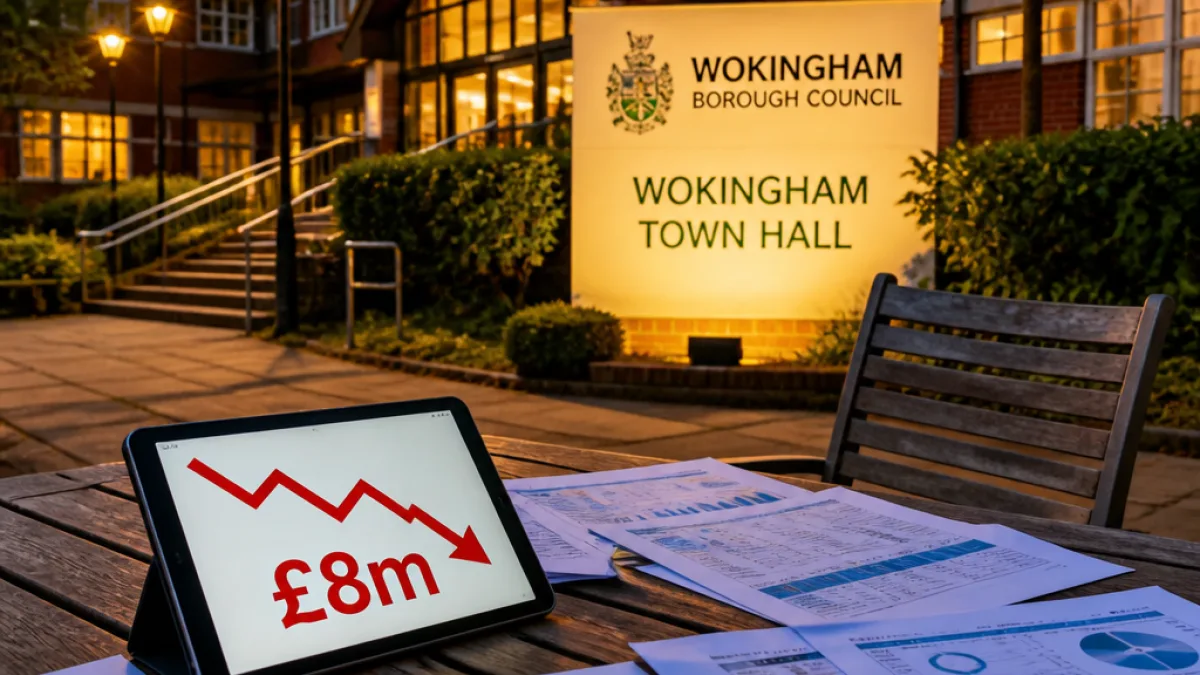
The executive committee at Wokingham Borough Council was told last week that officers are attempting to identify at least £8 million of previously unrecognised savings within the current financial year as the authority grapples with a substantial reduction in its baseline funding.
In presenting the revenue monitoring report for the first quarter, the executive councillor for finance and governance set out the shape of the challenge. The report says central government has increased its share of local business rates to 94% and reduced overall grants, leaving the council with a fall in baseline funding of £20 million per annum — a change described as the most significant adverse funding settlement the council has ever received.
“This report reflects the difficulties that we as a council are dealing with this year., due to the current government increasing their share of our business rates to 94%, and reducing our grants overall.”
Officers warned that at this early point in the year “all of our areas are predicting overspends” and that the council’s General Fund balance is forecast to stand at £6.8 million at the year end if no corrective action is taken. The balance exists to provide contingency for unforeseen expenditure and a degree of stability for longer-term planning, particularly in volatile economic conditions.
Priorities and the threat of stronger measures
Members were told the council will prioritise services for those in greatest need — notably children, the elderly and disabled residents — while seeking efficiencies elsewhere. The report notes that some projects are expected to improve the council’s financial resilience over time.
The leader of the council acknowledged the scale of the challenge but said he remained confident the authority would manage its position responsibly while protecting services for residents. The executive formally noted the contents of the report.
- £20m — reported reduction in annual baseline funding.
- £8m — target for unidentified savings and efficiencies this year.
- £6.8m — forecast General Fund balance at year end if current predictions hold.
- 94% — the share of business rates now retained by central government, according to the report.
Council finances across the country have been under pressure in recent years, and the figures presented to Wokingham’s executive reflect that broader squeeze. Locally, the implications are tangible: without swift and effective action the council warned it may have to take “strong actions to avoid insolvency”, language that underlines the severity of the situation.
What this means for residents and services
For many residents the first question will be whether front-line services will be affected. The council has signalled its intention to protect those with the greatest need, but with all service areas currently projecting overspends, choices are likely to follow if the £8m gap is not closed through efficiencies and other savings.
There is also a medium-term dimension. The report notes population growth and increasing complexity of need as continuing pressures that will make budgeting more difficult in future years. Projects intended to stabilise finances may take time to yield returns, meaning difficult decisions could be deferred but not avoided.
At a practical level, the executive’s discussion will feed into further scrutiny and, ultimately, into decisions about budgets, service plans and reserves. Residents and local organisations that rely on council funding would be advised to monitor forthcoming committee papers and consultations where proposals to realise savings will be set out.
| Item | Figure |
|---|---|
| Baseline funding fall | £20 million per annum |
| Target unidentified savings | £8 million |
| Forecast General Fund balance | £6.8 million |
| Government share of business rates | 94% |
The executive’s note of the report marks the start of what will be a closely watched period for local taxpayers and service users. With the council emphasising both the scale of the financial shock and its commitment to protecting vulnerable people, attention will now turn to how and where the savings will be found.