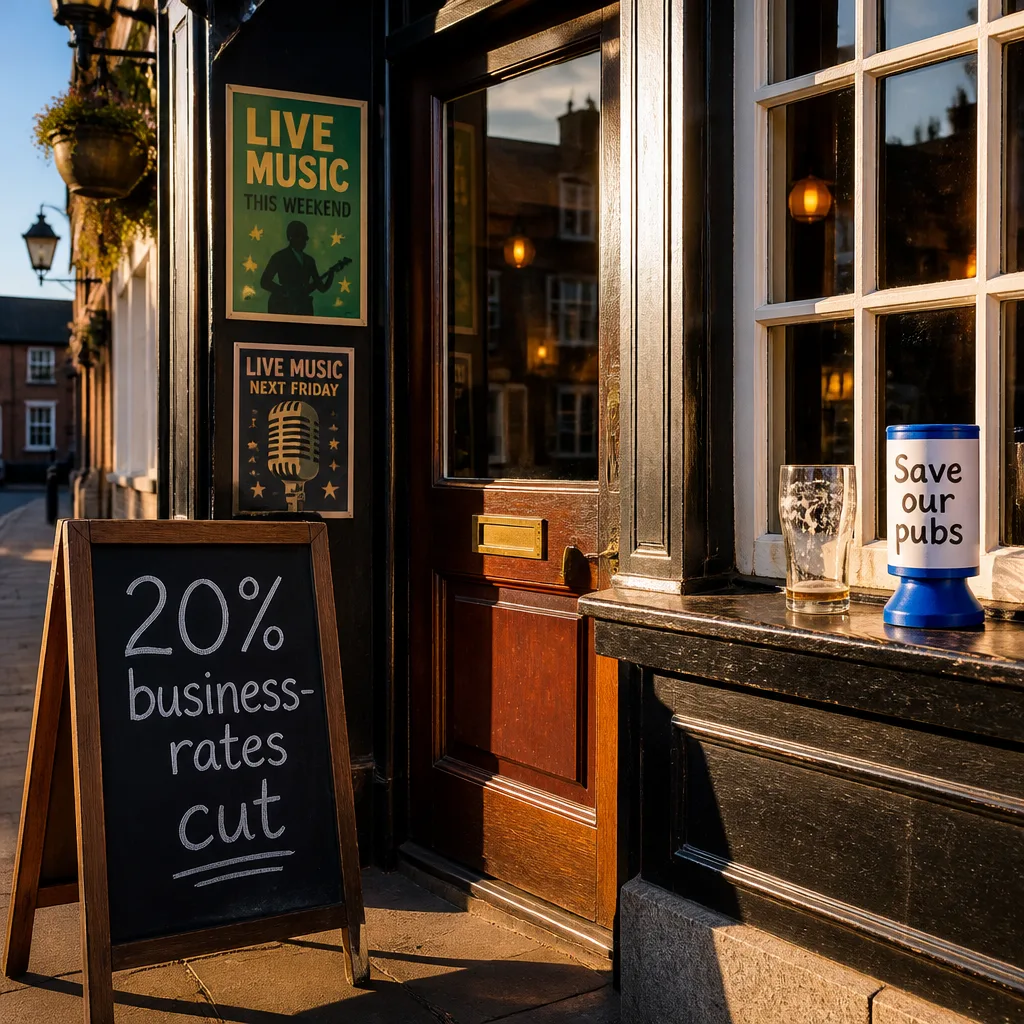
The new prime minister has announced a targeted tax cut that will reduce business rates for pubs, clubs and live music venues in England by 20%, a policy expected to benefit roughly 32,000 hospitality businesses to the tune of about £1,100 per firm annually.
Part of a flurry of early measures
The move is Mr Burnham’s third major cost‑of‑living announcement since taking office, following plans to cap most bus fares in England and to remove VAT from household electricity bills. Ministers described the business‑rates cut as an urgent step to stabilise parts of the high street that have been closing at pace.
Speaking on a visit to a pub in Harlow, east of London, the prime minister characterised the package as an early intervention and urged the sector to take heart. He told broadcasters:
"We're losing pubs. Pubs need to know that the cavalry is coming."
Industry reaction: welcome but limited
The hospitality sector offered a muted welcome while underlining the limits of the relief. Trade groups and some operators described the announcement as an encouraging but modest measure that does not address wider structural issues — notably the business‑rates regime itself and consumer spending power.
- Estimated beneficiaries: ~32,000 hospitality businesses in England.
- Estimated average saving: about £1,100 per business per year.
- Scope: pubs, clubs and live music venues; full details on funding and implementation have not yet been published.
Why the sector says more is needed
Operators pointed to longstanding pressures that have driven closures. The British Beer and Pub Association has previously warned the UK is losing pubs at a rate of around one a day, citing mounting costs such as higher energy and labour bills. Several owners and venue groups say that a percentage cut in business rates, while helpful, will not be enough to reverse closures or materially alter margins for marginal sites.
Industry leaders have urged a broader reform of business taxation for retail and hospitality, and some have pushed for changes to VAT treatment on food and drink sold in pubs and venues — an issue not addressed by this announcement.
Political and financial questions remain
Ministers have not yet provided full details on how the business‑rates reduction will be funded. That leaves open questions about whether the move will be met by savings elsewhere in departmental budgets, departmental reprioritisation, or temporary borrowing. The absence of a clear funding plan is likely to attract scrutiny from opposition parties and from businesses seeking certainty about the durability of the relief.
| Measure | Intended beneficiaries | Estimated saving per unit |
|---|---|---|
| 20% business‑rates cut (England) | Pubs, clubs, live music venues (~32,000 firms) | ~£1,100 pa |
| Cap on most bus fares | Public transport users in England | Details to be published |
| Removal of VAT on household electricity bills | Households on energy bills | Details to be published |
Analysts will be watching for clarity on timing and eligibility. The fiscal cost, once published, will determine how the policy fits into the government’s wider fiscal envelope and its ability to deliver further support.
What this means for communities
Pubs and venues play a social as well as economic role — providing employment and community hubs — and sector bodies welcomed a signal from government that those assets remain a priority. But for many operators the central question is whether this package will be enough to stabilise footfall and trading margins, or merely offer temporary relief.
The announcement is likely to focus attention on longer‑term reform of local business taxation and on complementary measures to boost household incomes and discretionary spending, which pubs and venues say are essential to sustained recovery.
For now, ministers describe the move as a first step rather than a final answer, and the industry remains cautious: a welcome reprieve, but one whose impact will depend on the durability of the policy and whether further, more structural changes follow.