
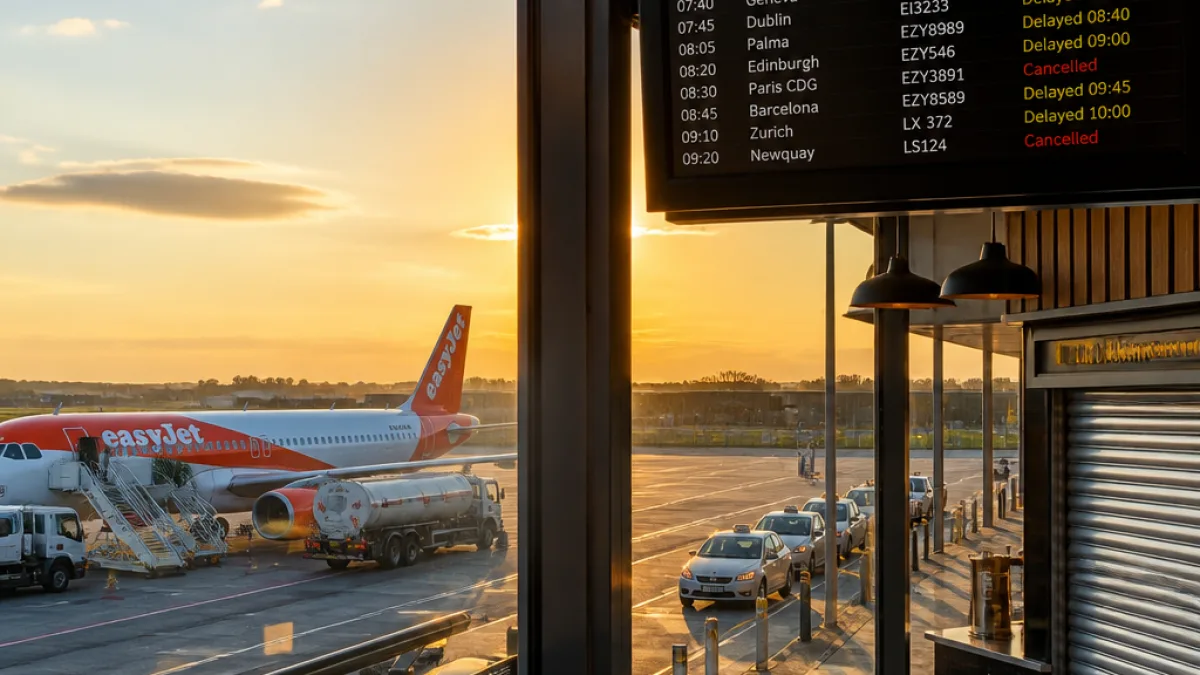
Airline downturn hits local hub
One of the largest budget carriers serving Leeds‑Bradford Airport has reported a sharp slump in quarterly profits, a warning sign for travellers and businesses around Bradford that rely on the airport. easyJet said pre-tax profits for the three months to 30 June dropped to £85 million from £286 million a year earlier, citing a substantial rise in fuel costs and a fall in bookings after the escalation of the US–Iran war.
The airline operates from Terminal 1 at Leeds‑Bradford and provides many direct routes popular with Bradford residents, including services to European cities. While easyJet said late bookings have remained strong in the summer, it warned the overall result for the full year will be sensitive to future booking patterns and jet fuel prices.
“The overall outcome for the full year remains dependent on the important remaining bookings, as well as fuel prices, which continue to be volatile.”
Numbers that matter locally
The cost of fuel was singled out as a decisive factor in the weakened performance. easyJet said fuel expenses rose by £105 million in the quarter, reflecting the immediate economic impact of the conflict in the Middle East.
| Measure | This quarter | Same quarter last year |
|---|---|---|
| Pre-tax profit | £85m | £286m |
| Passenger numbers | 25.8m | — |
| Fuel cost rise | +£105m | — |
What this means for Bradford
- Travel costs: higher fuel bills for airlines can translate into more expensive fares or reduced capacity on routes serving Leeds‑Bradford.
- Bookings uncertainty: easyJet said passengers are booking closer to departure, which could affect scheduling and the predictability of services from the airport.
- Local economy: weaker airline profitability may have knock-on effects for airport employment, catering, ground services and the tourist trade that benefits Bradford businesses.
The airline also flagged changes in booking behaviour, saying passengers were increasingly reserving at short notice. easyJet reported passenger numbers of 25.8 million in the quarter, with a small fall of 0.4% year on year. Its easyJet Holidays arm saw profits dip slightly to £84 million from £86 million, although it said its market share had increased.
Locally, the most immediate effect Bradford residents may notice is on fares and timetable resilience. If fuel remains volatile and late bookings continue to dominate, airlines face a tougher margin game. For communities that use Leeds‑Bradford Airport as their nearest hub, that can mean less certainty about direct routes, potential price rises and a more stop‑start recovery in passenger volumes.
Takeover backdrop complicates picture
The quarterly update comes hot on the heels of high‑profile takeover activity at easyJet. Two US investors have been circling the carrier: Apollo has reached an agreement in principle on a £5.7 billion approach while rival Castlelake had earlier proposed bids. Apollo has until 7 August to table a firm offer or withdraw under City takeover rules.
That takeover story adds another layer of uncertainty for staff and partners in the Leeds‑Bradford area. When ownership and strategic direction are in flux, decisions on route networks and investment priorities can be delayed, which is not ideal when airlines are wrestling with immediate cost pressures.
For now, easyJet says it has seen strong late bookings across the summer but cautioned that this is not sufficient to offset the hit from the Middle East situation. For Bradford folk planning holidays, the message is straightforward: keep an eye on fares and timetables and be prepared for short‑notice changes — and maybe book sooner rather than later, unless you enjoy the adrenaline of last‑minute deals.