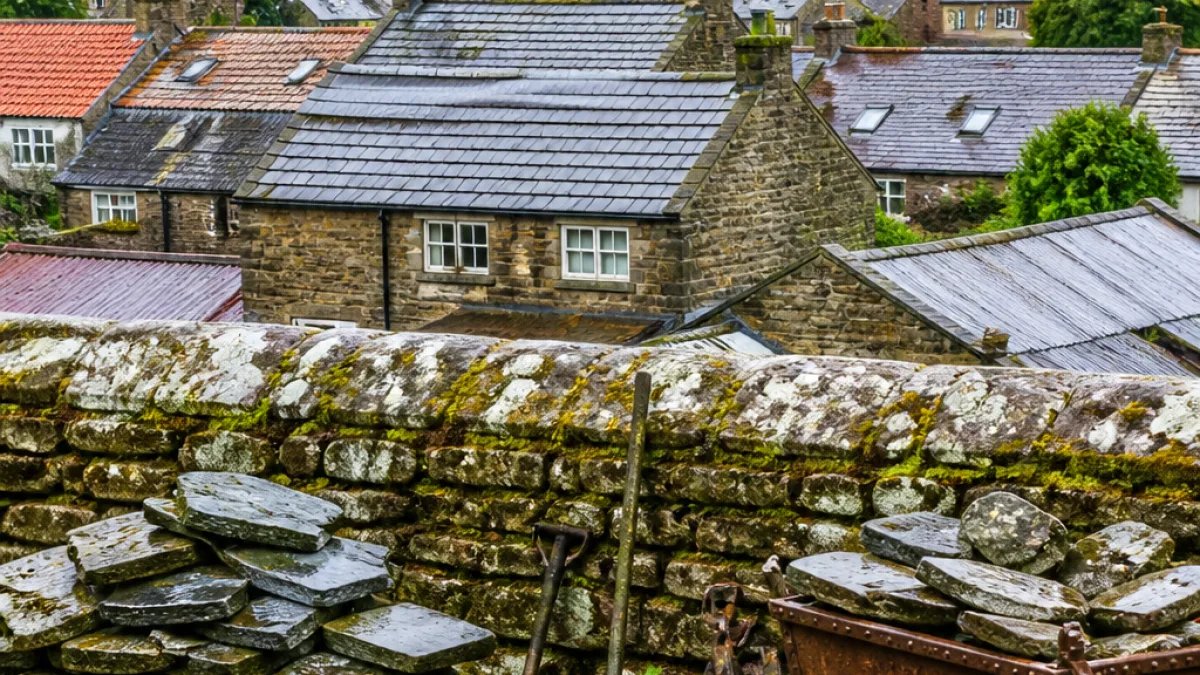
Scarcity of original roofs threatens local identity and traditional skills
Historic Environment Scotland (HES) has published an audit of Angus flagstone roofing that underlines how rare the once‑common roof type has become. The survey identifies that only around 240 buildings across Scotland retain flagstone roofs, of which fewer than 200 are in Angus, a dramatic decline from the material’s historic ubiquity in the region.
Angus flagstone, once quarried across the county, was celebrated for its natural ability to split into durable, flat slabs suitable for roofing, paving and walling. The audit places the present scarcity in the context of quarry closures and the subsequent movement of stone between properties, a process that has seen original roofs removed or cannibalised over generations.
Local examples and their significance
The report highlights notable surviving examples of Angus flagstone roofs that continue to contribute to the character of towns and rural settlements. One such building mentioned is Davidson Cottage, a vernacular dwelling dating to the 1720s that has connections to the Davidson family — known historically for their emigration to the United States and association with the founding of the Harley‑Davidson company. Restored between 2008 and 2012, the cottage is now cared for by a charity and attracts visitors including motorcycle enthusiasts.
Claypotts Castle is included among the illustrative images in the audit, demonstrating how flagstone roofing is woven into the visual and historic fabric of Angus. The loss of original material, the report warns, is not only an architectural concern but affects the regional identity that stonework has long embodied.
Skills gap and Lock 16 Centre of Excellence
HES emphasises that the decline in surviving roofs endangers the specialist craftsmen and women who know how to repair and conserve them. The audit notes that the loss of traditional skills has previously been framed as an 'emergency', and HES is directing investment towards training initiatives to arrest the decline.
Central to this response is a partnership with Scottish Canals on the creation of the Lock 16 Centre of Excellence for Canals and Traditional Skills. The Lock 16 project, currently under development, aims to support the recovery and transmission of specialist conservation skills that are critical to sustaining Scotland’s historic environment — skills that include the understanding and handling of traditional flagstone roofing.
- Historic scale: Angus flagstone was once widely quarried and used across the county.
- Current stock: Under 200 buildings in Angus retain original flagstone roofs.
- Conservation response: HES funding and the Lock 16 centre aim to rebuild traditional skills.
| Metric | Figure |
|---|---|
| Buildings with flagstone roofs in Scotland | ~240 |
| Buildings with flagstone roofs in Angus | <200 |
"The loss of Angus flagstone roofs threatens the survival of the specialist traditional skills required to maintain them."
The audit makes plain that conservation is not just about preserving individual buildings but about maintaining a living craft economy. Without a trained cohort of stonemasons and roofers conversant in flagstone techniques, repairs become more costly and less authentic, increasing the likelihood of inappropriate replacement materials being used.
For Angus communities the consequences are tangible: the erosion of a distinctive streetscape and rural character, potential negative impacts on heritage tourism, and the weakening of supply chains for repair‑grade stone. Local authorities, owners of listed buildings, and voluntary groups will face practical choices about prioritising scarce funding and labour to the roofs that best represent the county’s built heritage.
HES’s investment in training through facilities such as Lock 16 is intended to help bridge that gap by producing skilled workers capable of conserving flagstone roofs to traditional standards. The audit serves both as a register of surviving examples and as a prompt for action: safeguarding the roofs depends on matching material conservation with a renewal of craftsmanship.
As Angus looks to preserve what remains of this roofscape, the coming months will be important for planning how to deploy resources, record vulnerable buildings and ensure the next generation acquires the specialist skills necessary to keep Angus stone on its roofs.