Council gives go‑ahead for large Barkham solar scheme
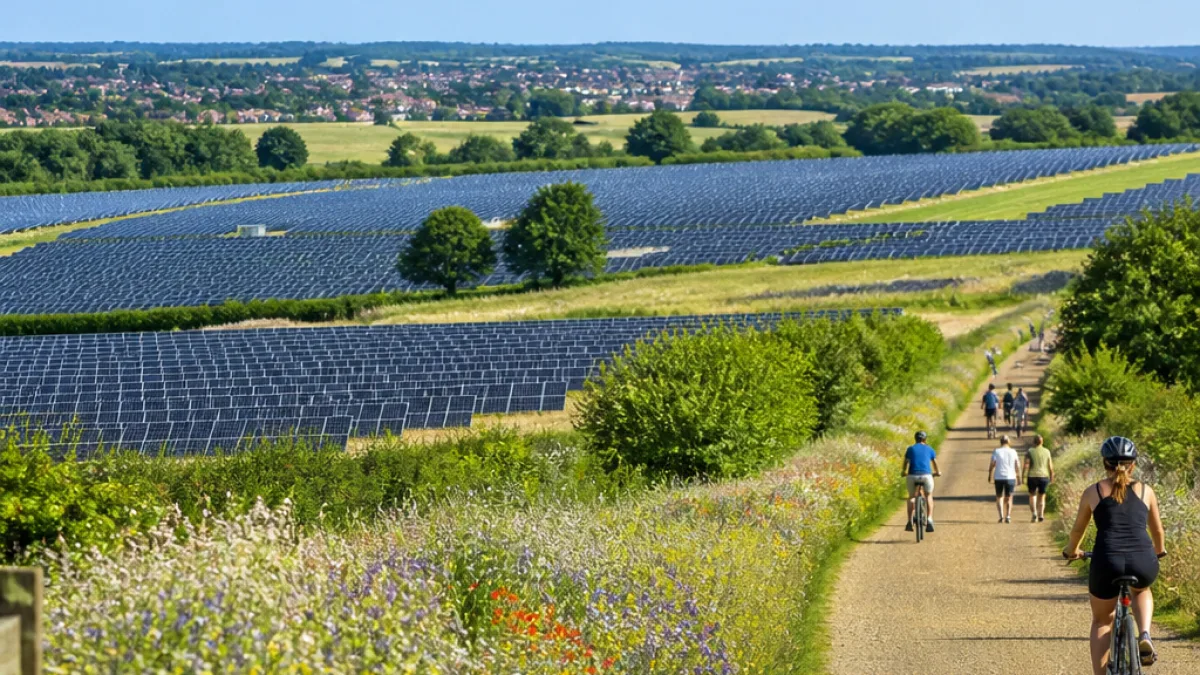
Wokingham Borough Council has granted approval for the Barkham Solar Farm, a development of approximately 43,000 photovoltaic panels on land to the north of California Country Park. The authority says the project is intended to supply the equivalent electricity demand of more than 10,500 homes and to bring direct financial benefits to council services.
Officers told councillors they now had what they described as “significantly greater clarity” on the timetable for connecting the site to the national grid, after earlier uncertainty raised the prospect of long delays. Subject to final contract sign‑off in the coming weeks, construction is expected to begin later this year.
“The project would generate significant revenue for the council which will go directly into protecting vital services,”
said Imogen Shepherd‑Dubey, the council's executive member for finance. She told the executive that the scheme's updated financial plans remained robust even when assuming cautious scenarios for any connection delay.
Timetable, income and environmental aims
The council has given a target for a partial grid connection in September 2027 and expects the site to be fully connected by 2029. It projects the scheme will deliver more than £1 million a year in net income for council services once operational.
Lou Timlin, the executive member for climate emergency, described Barkham as a “key project” within the council’s climate emergency action plan. Alongside a smaller local park‑and‑ride roof installation, she said Barkham would deliver a significant increase in clean energy for the borough.
Catherine Glover, chair of the Climate Emergency Overview & Scrutiny Committee, said there was “overall support for the project, and it is good to see it progressing”. The council has also said the scheme is expected to more than double biodiversity on the site and will include plans for a new walking and cycling route connecting Arborfield Green and Finchampstead toward Wokingham town.
- Scale: c. 43,000 solar panels
- Homes powered: more than 10,500
- Partial connection: targeted September 2027
- Full connection: expected 2029
- Annual net income: in excess of £1 million for council services
Local consequences and commuter‑belt context
For residents of Wokingham and surrounding villages, the approved scheme touches on two intertwined concerns typical of the Thames Valley commuter belt: protecting local services amid financial pressures, and meeting climate commitments while managing infrastructure constraints. The council’s argument is explicitly fiscal as well as environmental — the projected net income will be channelled into protecting services at a time when many local authorities are balancing tight budgets.
The link to the grid has been central to the debate. National changes to how grid connections are allocated have threatened to move some new renewables projects years into the future; securing greater clarity on that timetable was a prerequisite for the executive to recommit to the scheme. A partial connection in 2027 would allow some generation and income to begin before the full connection in 2029, a staging the council says de‑risks the business case.
The planned walking and cycling link also speaks to local transport priorities: improving sustainable travel routes between new residential developments and Wokingham town is a frequent demand from campaigners and councillors alike, and tying Active Travel gains into energy projects demonstrates an integrated approach to place‑making.
| Item | Detail |
|---|---|
| Location | Land north of California Country Park, Barkham |
| Panels | Approximately 43,000 |
| Homes powered | More than 10,500 |
| Partial grid connection | September 2027 (target) |
| Full connection | Expected 2029 |
| Council net income | More than £1m per year |
Opposition or public concern about large‑scale solar is usually focused on landscape impact and land use trade‑offs. In this case, the council is emphasising biodiversity gains and active travel links as mitigating public benefits. Whether that will satisfy all local stakeholders remains to be seen as contract finalisation and early works proceed.
With construction pencilled in to start later this year, the Barkham site will be one to watch for residents interested in how local government is using public assets to meet both fiscal and environmental goals while navigating national infrastructure constraints.