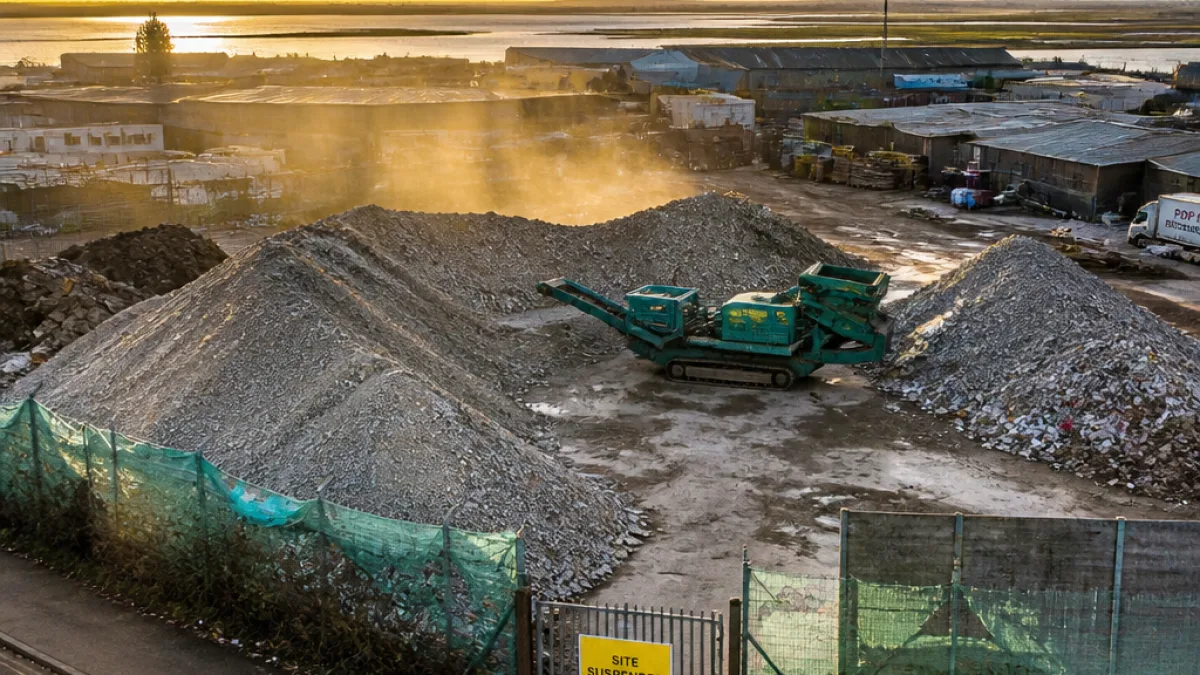
Environment Agency suspends operations at Hilsea recycling site
The Environment Agency has ordered a Portsmouth recycling site to stop processing waste after inspectors found dangerous dust emissions and other breaches that posed a risk to nearby businesses and protected wildlife areas.
Emmerson Transport Ltd, which operates a facility on Ackworth Road in Hilsea, was served with a suspension after an inspection on 7 July found several failures in site controls. The company has been given until Friday to remedy the issues or face continued prohibition of waste processing activities, the regulator said.
- Dust control failures: Inspectors reported inadequate dampening and cleaning of surfaces and vehicles, and perimeter nets with holes.
- Waste pile limits exceeded: Mounds were recorded up to 5m high, surpassing the site permit limit of 3m.
- Crusher relocated: A crusher had been moved to a more exposed position and was no longer discharging into the main building, increasing the risk of airborne dust.
"Emmerson Transport Ltd have failed to limit harmful dust emissions. We suspended waste processing activities at this site and will not allow them to resume until the necessary improvements have been made,"
The regulator warned that the condition of the site created a hazard not just to workers and neighbouring industrial units on the estate, but also to the Hilsea Lines wildlife area and the Solent and Dorset Coast Special Protection Area.
Local impact and environmental concern
The suspension affects a facility that supplies aggregates including crushed rock, gravel and sand to construction and landscaping markets. While the Environment Agency statement did not detail an immediate stoppage of deliveries, the prohibition on processing will impede the site's ability to produce and supply crushed materials until compliance is demonstrated.
Portsmouth residents and businesses operating near Ackworth Road rely on robust controls at industrial sites to limit airborne dust, which can exacerbate respiratory conditions and reduce air quality. The report of vehicle and surface cleaning failures raises particular concerns for workers and firms on the industrial estate who may be exposed during daily operations.
What inspectors found
Inspectors identified a series of permit breaches and poor site management that, when combined, increased the likelihood of dust leaving the site. Key facts noted in the Environment Agency report include:
| Issue | Detail |
|---|---|
| Waste pile height | Up to 5m recorded vs permitted 3m |
| Cleaning and dampening | Insufficient; surfaces and vehicles not adequately cleaned |
| Crusher position | Moved to a more exposed area; no longer discharging into main building |
| Perimeter containment | Nets had holes, reducing effectiveness |
The Environment Agency said it would not permit processing to resume until it is satisfied that necessary improvements have been made. No timetable for formal enforcement beyond the Friday deadline was provided in the statement.
Next steps for the company and community
Emmerson Transport Ltd must now provide evidence of remedial steps to meet the terms of its environmental permit. Those steps are likely to include reducing pile heights to the permitted limit, repairing perimeter containment, restoring the crusher to a contained position and improving wetting and cleaning regimes to suppress dust.
For nearby residents and the wider Portsmouth community, the regulator’s intervention highlights ongoing tensions between industrial activity and environmental protection in mixed-use areas. The proximity of the Hilsea Lines and the Solent and Dorset Coast Special Protection Area underscores the potential ecological consequences of dust and other pollutants escaping from industrial sites.
The Environment Agency’s action is part of a wider regulatory role in ensuring waste sites operate within permit conditions intended to protect public health and environmentally sensitive areas. It will remain for local businesses, residents and environmental groups to monitor whether the company delivers the promised improvements and whether the regulator enforces further action if it does not.