Proposal to tighten renovation rules for Monmouth Street
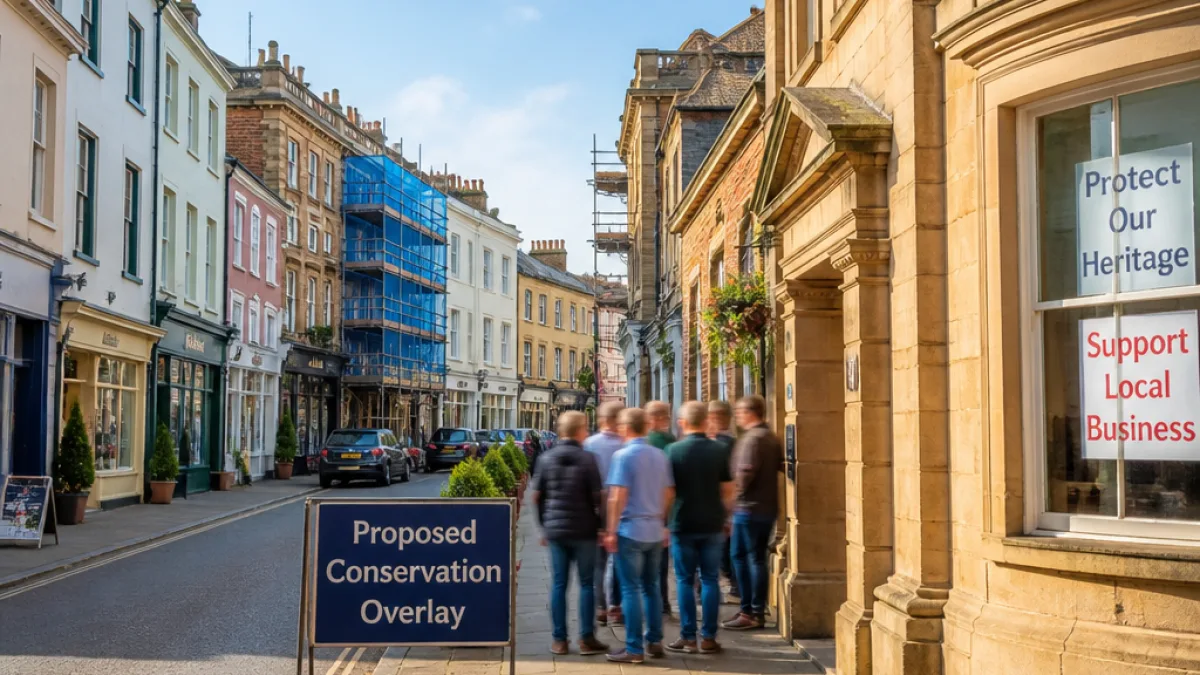
The Newport Historic Preservation Commission has put forward a proposal to create a local historic overlay for Monmouth Street, a measure intended to strengthen guidelines on how shops and commercial buildings may be renovated, replaced or altered according to their historical significance. The move has sparked a public debate between those who see protection as essential to preserving a central streetscape and those who fear it will impose costs and discourage investment.
Voices for conservation and continuity
City commissioner Mike Radwanski framed the issue as a broader question of civic identity and planning. In discussing the overlay he asked, "How do we want to preserve some of that past and what is the right fit for that?" The question highlights a familiar tension in towns and cities seeking to retain character while remaining commercially viable.
Supporters of the proposal include experienced local restorers. Resident Brian Malone, who has taken part in restoration projects across Newport, said he welcomed the prospect of a locally designated historic area. In his words,
"I'm really excited about the possibility of a local historic district here in Monmouth Street. Monmouth Street is kind of like the heart of Newport. It's our main street,"adding that he and others have invested in both houses and commercial properties in the city.
Business concerns: taxes, vacancies and cost
At a recent Historical Preservation Committee meeting several business owners raised worries about the financial and practical implications of the overlay. Former Newport mayor Jerry Peluso, who runs Peluso's Market, cautioned that historic designation can be followed, in his experience, by rising assessments. He told the meeting that
"(In) my experience, after a neighborhood has been in the historic district, after it's been voted on 3 to 4 years past that, assessments start to creep up,"and added,
"And I'm not talking about the standard 8%."
Jeff Schlosser, owner of Schlosser Gunsmithing Co., expressed a different but complementary worry: that adding regulation could exacerbate the number of empty units along Monmouth Street. As he observed,
"When I hear a whole bunch of vacancies on Monmouth Street, there's a cost involved in this overlay,"suggesting potential negative effects on the high street's attractiveness to new and existing traders.
What is at stake
The proposed overlay would tighten criteria for alteration and replacement of properties, with the aim of protecting architectural character. Proponents argue such protections support long‑term tourism, civic pride and the appearance of the town centre; critics warn of unintended consequences such as higher property assessments, costs for compliance and an increase in empty premises if development is deterred.
- Supporters: preservationists and local restorers who view Monmouth Street as the historic heart of the city.
- Opponents: business owners worried about rising assessments, added costs and a potential increase in vacancies.
- Decision pending: the proposal is under consideration by the Historic Preservation Commission and has been the subject of public comment.
Stakeholders and positions
| Stakeholder | Position |
|---|---|
| Newport Historic Preservation Commission | Proposes local historic overlay to protect Monmouth Street |
| Mike Radwanski (City Commissioner) | Frames the debate around preserving past while finding the right fit |
| Brian Malone (resident/restorer) | Supports designation; praises Monmouth Street as the city's main street |
| Jerry Peluso (shop owner, former mayor) | Concerns over rising assessments after designation |
| Jeff Schlosser (shop owner) | Fears overlay could increase vacancies and costs |
For residents of Monmouth and other towns with cherished high streets, the Newport discussion will be familiar: how to conserve tangible history without placing new burdens on the businesses that animate the streets. The Commission's next steps will be watched closely by local traders, property owners and citizens concerned about the future of Monmouth Street's character and commercial health.