Plan for decades, not just contracts, say industry voices
The prospect of floating offshore wind in the Celtic Sea represents more than a series of construction contracts for the Swansea Bay area. Industry commentators and regional stakeholders argue the region must look beyond initial installation and build capacity across the entire lifecycle — including design, fabrication, operations, maintenance and eventual decommissioning — if it is to secure lasting economic benefit.
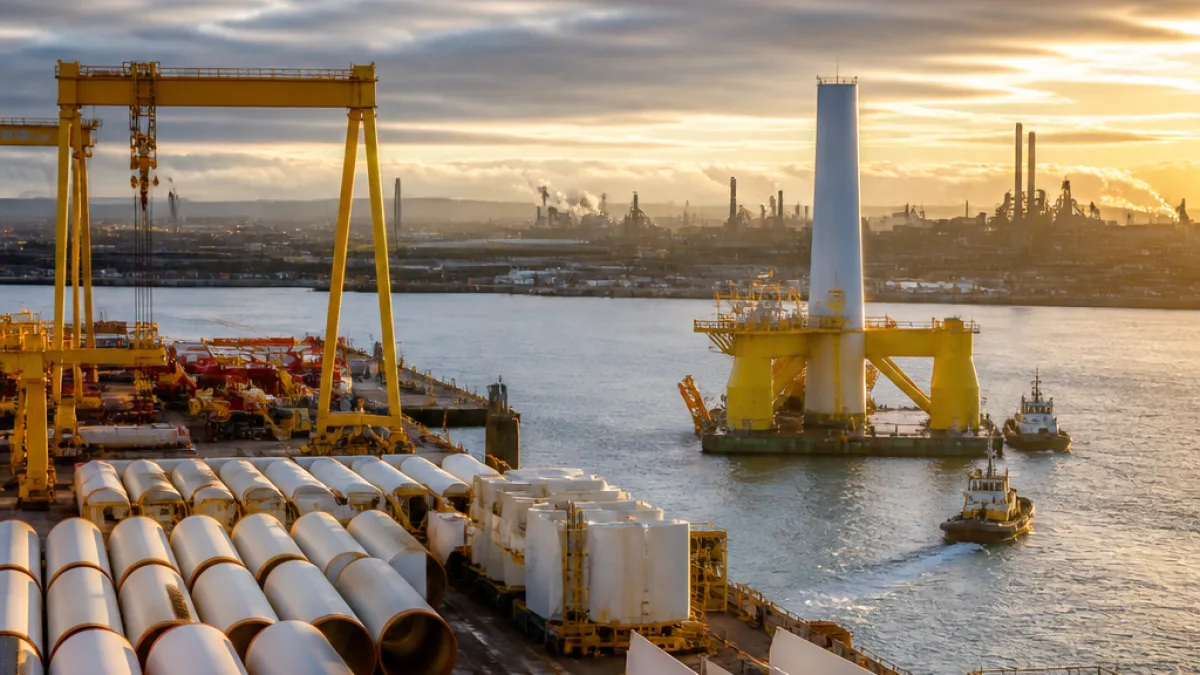
South West Wales already hosts academic and industrial capabilities relevant to the emerging sector, and there is growing attention on how much of the supply chain can be retained locally. Ports, fabrication yards, engineering firms, digital service providers and specialist materials suppliers are all potential beneficiaries, and the scale of the opportunity could extend for decades.
- Design and engineering: early-stage work that anchors high-value skills.
- Manufacturing and fabrication: potential for local yards and supply chains.
- Installation and maintenance: long-term operational jobs for ports and crews.
- Materials recovery and decommissioning: end-of-life activity that can create circular-economy opportunities.
Those making the case for long-term planning note that floating wind should not be treated as a short construction programme. Instead, authorities and businesses should consider how to foster industries and expertise that endure beyond the first projects. The argument is that early planning for the full lifecycle raises the chances that opportunities translate into local companies, long-term employment and higher-value activity.
"Planning for the full lifecycle now gives the region a better chance of building industries and expertise that endure."
Energy users must be central to decisions
A further, and equally important, question is what the electricity produced will enable locally. Historic economic shifts in the Swansea region — such as those shaped by coal in previous centuries — show how energy availability can underpin new industries. Observers say the debate around floating offshore wind should focus on potential off-takers and how power is routed, because where and how the energy is used will influence investment decisions and the amount of economic value that stays in the region.
Port Talbot, with its established heavy industrial base, is frequently cited as a place where ready access to large volumes of renewable electricity could accelerate decarbonisation and support future investment in energy-intensive manufacturing. Close co-ordination between project developers, local industry, ports and decision-makers will therefore be critical.
What local capture could look like
Capturing a meaningful share of the floating wind supply chain for Swansea Bay will depend on several practical factors. Investors will seek strong management teams, access to skilled labour, credible markets and partners able to help firms scale. Those considering multiple locations want clear information on available facilities, local advisory networks and the speed with which decisions can be reached.
| Sector | Local opportunity |
|---|---|
| Ports & logistics | Staging, installation and O&M bases |
| Fabrication | Component manufacture and assembly |
| Engineering & digital | Design, modelling and remote services |
Regional strengths such as university research, engineering firms and a collaborative business culture can help. Yet those strengths must be made visible and navigable to outside investors. The more effectively Swansea Bay can present a coherent proposition — matching skills, facilities and policy support — the more likely private capital will follow.
For Swansea Bay residents, the stakes are tangible: beyond the clean-energy credentials, floating offshore wind could reshape local employment, supply chains and industrial prospects for decades. Securing those gains will require coordinated planning between developers, councils, universities and industry so that the region not only hosts turbines, but builds lasting capabilities around them.