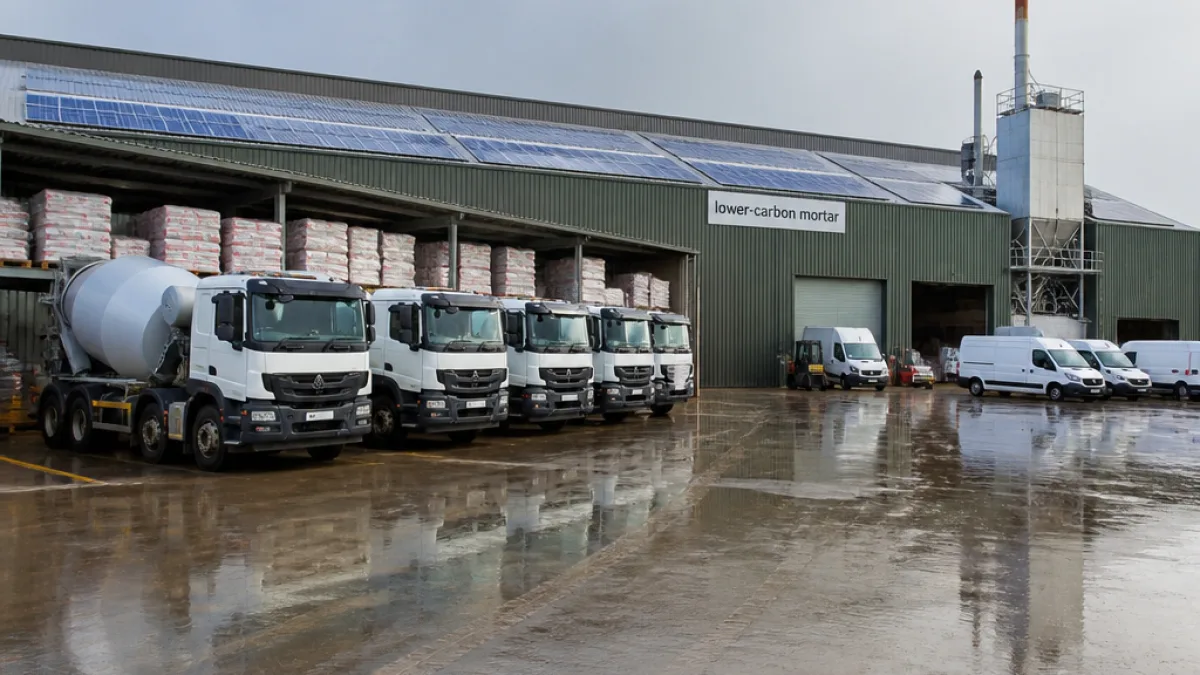
Global building materials supplier Cemex has officially opened a new production facility in Swindon, Wiltshire, focused on lower‑carbon dry mortar and sprayed concrete. The move is intended to expand the company’s capacity in the South East and South West, improve regional resilience of supply and enable nationwide distribution of these products.
What the new plant offers
The plant incorporates a state‑of‑the‑art drying process that Cemex says has been developed to reduce heat and save fuel, measures the firm presents as contributing to lower operational carbon intensity. Incoming materials will be handled in a dedicated under‑cover storage area, providing additional shelter and protection from wet weather — a practical benefit in this part of the country where construction timetables can be disrupted by prolonged damp conditions.
In a statement accompanying the announcement, Cemex UK’s Mortar managing director, Lex Russell, said the company had seen demand exceed capacity at its existing plants, and that the Swindon site would allow the business to better serve and penetrate regional markets. The company explicitly linked the new facility to efforts to expand its national reach for both dry mortar and sprayed concrete.
“We have seen our Mortars business grow from strength to strength in recent years, with demand exceeding capacity for dry mortar and sprayed concrete at Dove Holes in Derbyshire and at our dry mortar plant in Braintree, Essex,”
Regional context and likely consequences
The arrival of a major supplier’s plant in Swindon is significant for a town that has long been a transport and distribution hub for the South West. While Cemex has not supplied detailed employment figures or publicly stated the exact production capacity of the new site, the company has framed the opening as a response to strong commercial demand and as an enabler of broader geographic coverage.
Local contractors and builders stand to benefit from reduced lead times and more reliable access to mortar and sprayed concrete, products used widely across housing, commercial developments and infrastructure projects. The under‑cover storage should also reduce the risk of weather‑related delays on jobs dependent on dry material deliveries.
- Products produced: lower‑carbon dry mortar and sprayed concrete
- Operational features: energy‑efficient drying process; dedicated under‑cover storage
- Regional impact: increased supply capacity in South East and South West; part of nationwide distribution network
How this fits with Cemex’s network
Cemex pointed to existing sites at Dove Holes in Derbyshire and a dry mortar plant in Braintree, Essex, where demand has reportedly outstripped capacity. The Swindon facility is described as an additional node intended to relieve pressure on those plants and to provide enhanced service for customers across the south of England.
| Existing sites | Product focus |
|---|---|
| Dove Holes, Derbyshire | Dry mortar / sprayed concrete (demand exceeding capacity) |
| Braintree, Essex | Dry mortar (existing plant) |
| Swindon, Wiltshire (new) | Lower‑carbon dry mortar and sprayed concrete; energy‑saving drying; covered storage |
For Swindon residents, the announcement is a reminder of the town’s continuing role in the regional industrial and logistics landscape. While the company’s statement did not specify numbers on jobs or investment, the technical features described — and the explicit aim to increase regional capacity — suggest a meaningful operational footprint.
Local authorities and contractors will be watching for follow‑up details such as employment figures, shift patterns and the volume of materials the plant can supply. For builders working against the county’s unpredictable weather, the under‑cover storage could make the difference between a job staying on schedule or slipping by days or weeks.
As construction activity continues across the South West, the Swindon plant represents both an industrial vote of confidence in the area and a practical attempt to smooth supply chains while lowering the carbon intensity of common building materials.