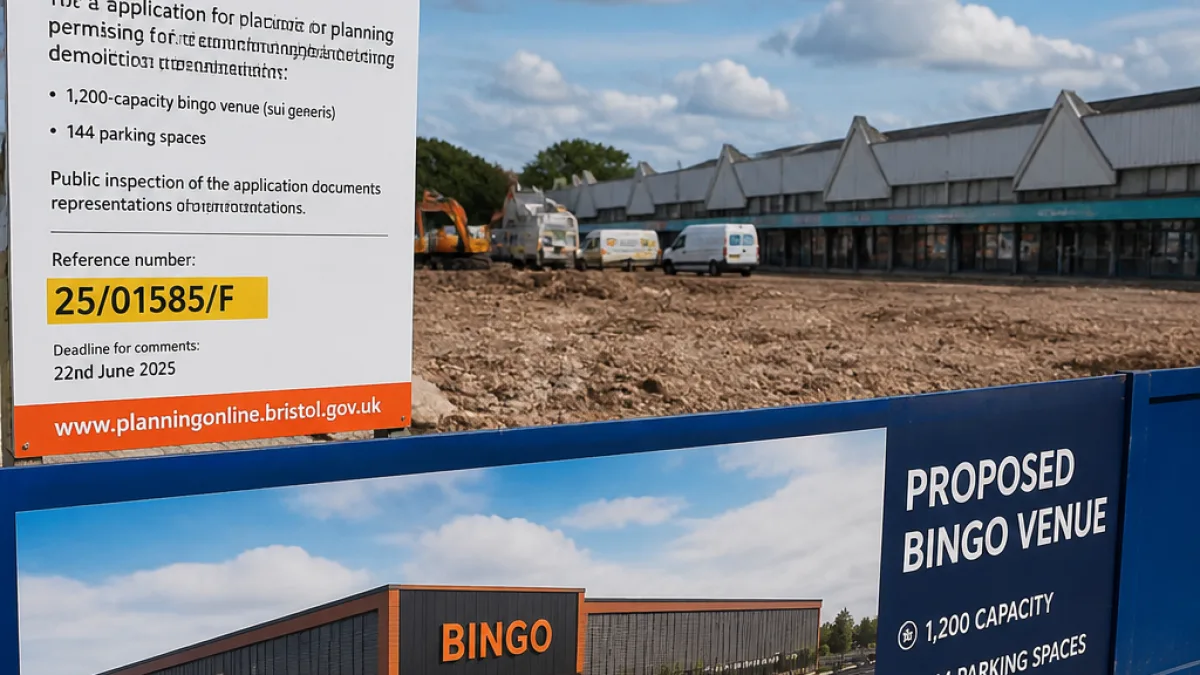
Councillors in Bristol have granted planning permission for a new bingo hall on Hartcliffe Way, approving a scheme that council officers had recommended be refused because the land had been earmarked for housing.
Decision overrides officer advice on housing allocation
The site is understood to be connected to the Broadwalk Shopping Centre redevelopment, where Club 3000’s former home is set to be demolished to make way for 550 new homes. The new venue, approved on Wednesday, will have a capacity for 1,200 customers and provide 144 parking spaces. It is scheduled to open in 2027.
Planning officers had argued the plot should be retained for housing and raised practical concerns about access to public transport, suggesting a city‑centre site might be more appropriate. They also flagged public health issues because the operator typically includes gambling machines in its bingo halls, and the proposed location is in one of the city’s most deprived wards.
Community campaign and councillors’ view
Despite officers’ reservations, the planning committee sided with local supporters. The application attracted substantial public backing, with about 500 letters written in favour and a smaller number opposing it. Several older residents travelled to the council meeting to make their case for the social role the club plays.
“It’s a community of friends and a place where everyone can go,” said 80‑year‑old Carol McCall, who told councillors she had travelled 130 miles to show her support and recalled the personal importance of Club 3000 when she moved to Bristol.
Councillor Rob Logan dismissed the argument that bingo should not be sited in a working‑class ward, telling the committee it was “just wrong” to suggest facilities could be acceptable in more affluent areas but off‑limits elsewhere.
Health, licensing and transport concerns remain
Public health officers had raised "significant public health concerns regarding the location of gambling premises in one of the most deprived wards in the city", reflecting worries about the potential for problem gambling where socio‑economic vulnerability is higher.
The planning committee said the council’s licensing committee would consider conditions on operating hours and measures to mitigate problem gambling when the licensing application is taken forward. Officers also highlighted that public transport links to the site are not as strong as in central locations.
- Supporters emphasised the club’s social value for older and isolated residents.
- Opponents and officers pointed to the site being earmarked for housing as part of wider redevelopment plans.
- Public health concerns centre on the prevalence of gambling machines and the socio‑economic profile of the ward.
- The licensing committee will later consider operating conditions intended to reduce gambling harm.
Local context and consequences
The decision places on public record a tension familiar to many cities: how to balance the immediate social needs of a community against longer‑term strategic planning priorities such as housing delivery. The Broadwalk Shopping Centre site has already been earmarked for significant housing development — 550 homes — and the demolition of Club 3000’s former premises was part of that wider scheme.
Approving a large leisure venue on land that officers considered better used for housing will raise questions for planners and residents about where housing needs are sacrificed for community uses, and how the city weighs the social value of institutions that serve vulnerable groups. For Hartcliffe Way, the new bingo hall promises a hub for social contact and companionship — important in wards with limited community spaces — but it also brings the risks associated with gambling activity to a relatively deprived area.
The matter now moves to the licensing stage, where operational conditions will be debated in order to address the public health concerns cited by officers. Transport implications remain unresolved: the site’s relative distance from strong public transport links may shape future traffic patterns and demand for parking.
For residents watching the regeneration of Broadwalk and the wider area, the decision is a vivid example of the compromises embedded in local planning decisions — between homes, jobs, and the social facilities that knit communities together.