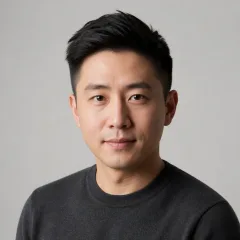
Biohaven Ltd. has appointed John Yetimoglu, founder and chief investment officer of Infinitum, to its board of directors with immediate effect, naming a technology investor to help steer its widening use of artificial intelligence and computational methods in drug development.
Why the hire matters
The move signals Biohaven’s conviction that medical breakthroughs will increasingly rely on the convergence of biology, data and computation. Yetimoglu brings a track record investing in semiconductors, videogaming and next-generation AI application platforms, and currently sits on the board of Groq, a company described in Biohaven’s announcement as a leader in AI inference computing.
The press release highlights Yetimoglu’s role as an early investor in Groq and notes his service through that company’s December 2025 transaction with NVIDIA, valued at $20 billion. Biohaven said it expects his perspective on frontier technology and AI infrastructure to strengthen the board’s oversight as the company expands use of artificial intelligence, machine learning and advanced computation “across discovery, translational science, and clinical development.”
"John sits at the intersection of technology and life sciences at exactly the moment those worlds are coming together," said Vlad Coric, M.D., Chief Executive Officer and Chairman of Biohaven.
What the appointment brings — and what it does not
On paper, appointing an investor steeped in AI hardware and application platforms is a logical step for a biopharmaceutical company seeking to accelerate in silico approaches to drug discovery. The company itself positioned the hire as complementary to Biohaven’s record of translating science into approved therapies and its intention to integrate computational approaches into medicine development.
- Expertise on the board: Yetimoglu’s experience spans investing in semiconductors and AI platforms, plus a previous role as an analyst at Morgan Stanley covering technology and biotechnology sectors.
- Strategic signalling: Bringing a technology investor into a drug developer’s board provides strategic credibility to plans for data-led drug discovery and could influence choices on AI infrastructure and partnerships.
- Limits of appointment: A board appointment is not an operational change; oversight and strategic counsel do not guarantee successful integration of AI methods into R&D workflows.
Yetimoglu commented that Biohaven has an "extraordinary record of translating science into approved therapies" and that the opportunity to apply modern AI and technology to drug development is accelerating, adding that he is "honoured to join the Board" and to help the company harness these tools.
Context and implications for the sector
The appointment sits within a broader industry trend of life-science companies recruiting technology talent or investors to boards as they seek to deploy artificial intelligence and machine learning across discovery and clinical development. That convergence raises practical questions about procurement of computing infrastructure, data governance, regulatory expectations and the metrics that will determine whether computational approaches deliver better, faster or cheaper medicines.
Biohaven’s statement does not detail specific AI programmes, infrastructure commitments or partnerships that will flow from the appointment. It also does not specify any governance changes, such as new board committees or metrics to assess AI projects — matters that investors and regulators increasingly scrutinise as companies claim to be "AI-enabled."
| Fact | Detail |
|---|---|
| New director | John Yetimoglu, Founder & CIO of Infinitum |
| Relevant prior role | Director at Groq; early investor through December 2025 NVIDIA transaction (~$20bn) |
| Biohaven focus | Expanding AI, machine learning and advanced computational methods across discovery, translational science and clinical development |
For observers, the critical question is not who sits on the board, but how a drug developer translates board-level AI enthusiasm into reproducible research practices, validated computational models and regulatory-grade evidence. Boards can nudge strategy and provide connections to technology ecosystems; converting that into improved clinical outcomes remains a separate, technically demanding challenge.
The appointment nevertheless underlines how investors and corporate leaders see artificial intelligence as a strategic lever for life sciences — a perspective that will shape deal-making, hiring and research priorities across the sector in the months ahead.