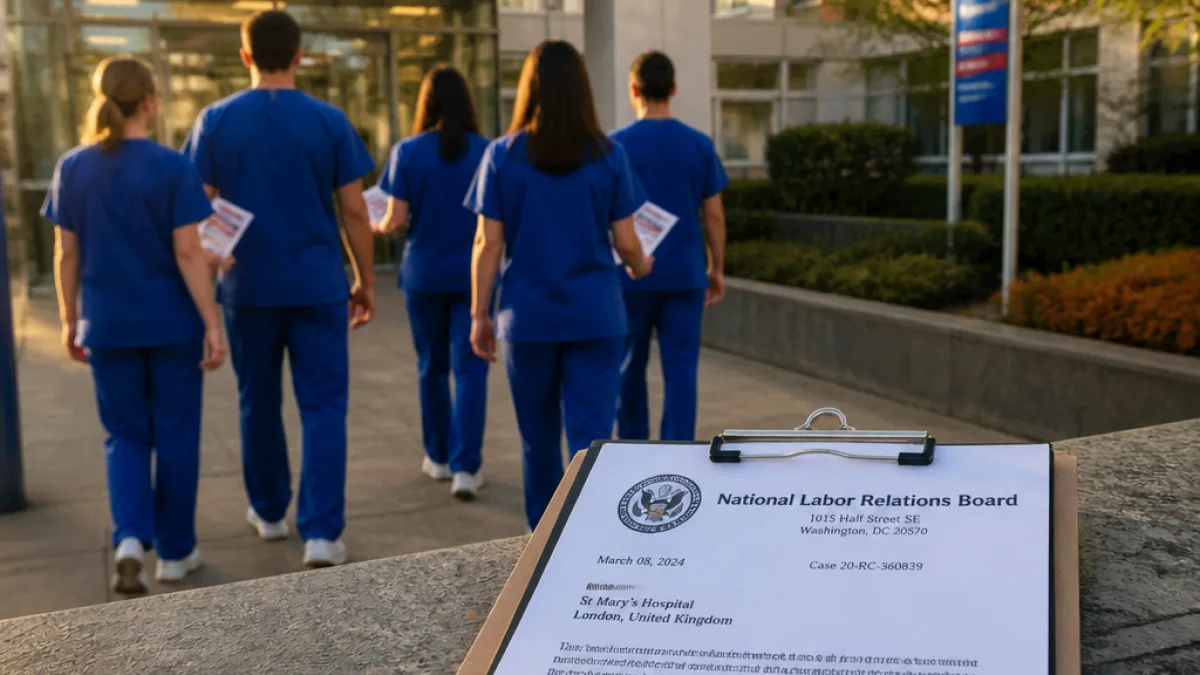
The National Labor Relations Board (NLRB) has certified the nurses’ union at St Mary’s Hospital after finding no basis to overturn the result of a June 11 ballot in which nearly 900 registered nurses voted in favour of forming a union.
Board rejects employer challenge
SSM Health, the organisation that owns St Mary’s, filed an objection to the election one week after the vote, contending that certain charge nurses should not have been permitted to participate because they were supervisors.
Case notes on the NLRB website show that 83 ballots cast in the election were challenged. The Board, however, concluded the objections did not invalidate the overall result and certified the union.
- Vote date: 11 June
- Supporters: Nearly 900 registered nurses voted in favour
- Challenged ballots: 83
- Employer action: SSM Health filed an objection one week after the vote
What the parties said
SSM Health acknowledged receipt of the NLRB staff decision and said it was reviewing the ruling. In a statement the organisation said:
"SSM Health respects the federal labor law process. We have received the National Labor Relations Board (NLRB) staff decision and are reviewing it."
Nurses who backed the union said they intend to begin preparing negotiation proposals. In a release circulated by the Service Employees International Union, veteran cardiac catheterisation lab nurse Zach Zahalka described the Board’s decision as a step forward.
"We’re already moving forward with filling out surveys to determine our negotiation proposals. SSM needs to stop trying to undermine our union, and instead focus all their resources on engaging with us productively so that together we can create real solutions for better staffing and retention to provide the best care,"
The comments underline the priorities the nursing staff intend to press in bargaining: staffing, wages and working conditions. Those are familiar fault lines in healthcare labour disputes worldwide, and the outcome of forthcoming negotiations will determine how effectively the union can secure changes.
Local resonance and wider context
Though this ruling comes from a federal labour board across the Atlantic, its themes will strike a chord with communities here. St Mary's hospitals and their nursing teams are often central to life in coastal towns – both as local employers and as guarantors of urgent care and routine services. Disputes over staffing and retention can affect waiting times, continuity of care and the morale of staff who work long shifts in high-pressure environments.
Union recognition is the starting gun for collective bargaining. Certification by the NLRB does not itself set terms, but it obliges the employer to recognise and engage with the union as the representative of the bargaining unit. What follows will be a period of negotiation where both sides seek to make their case, and where nurses will expect concrete moves on the matters they put forward.
For patients and the broader community, the key questions will be whether talks can be conducted without industrial disruption and whether agreements reached translate into more stable staffing and improved retention. In coastal and rural areas especially, where recruitment and workforce turnover are perennial challenges, those outcomes matter for the accessibility and continuity of care.
Numbers at a glance
| Item | Detail |
|---|---|
| Ballot date | 11 June |
| Votes in favour | Nearly 900 registered nurses |
| Challenged ballots | 83 |
| Employer | SSM Health |
The certification now places the parties at the negotiation table. For ordinary people who rely on their local hospital – whether along a windswept estuary or in a market town – the resolution of those talks will have practical consequences. In the meantime, the result marks a moment of agency for the nursing staff, who have signalled they are prepared to press for changes they believe will improve care and the conditions in which it is delivered.