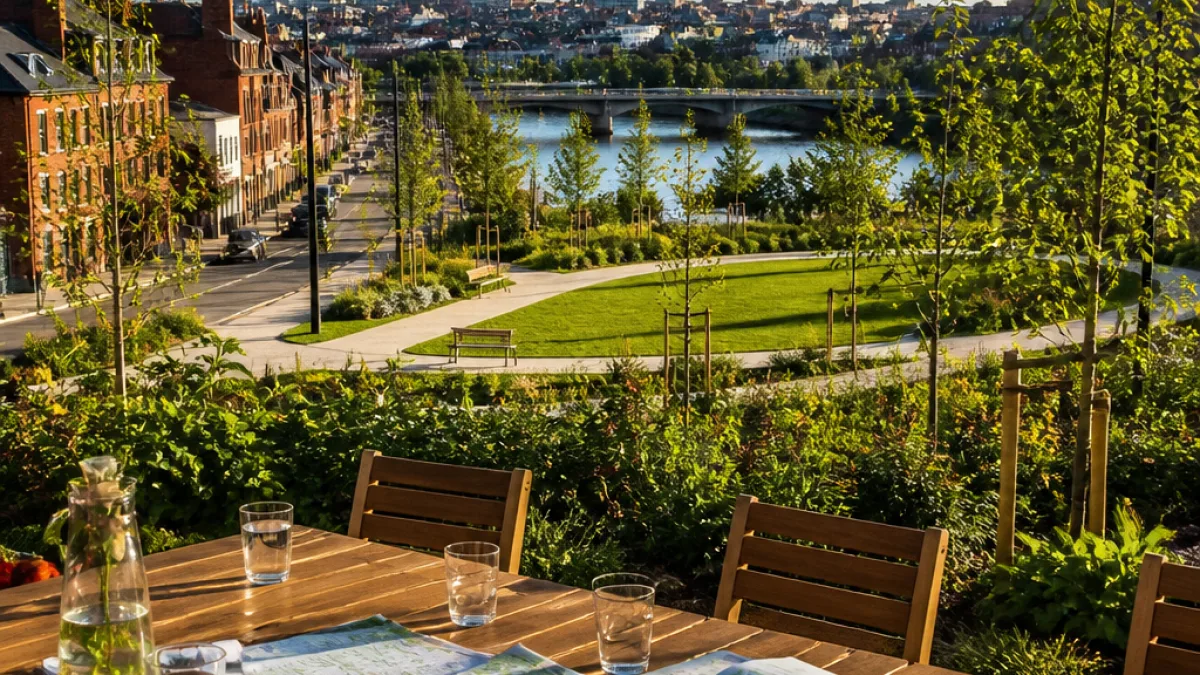
Nearly 60 residents from across Nottingham have produced a plan aimed at making the city greener, healthier and more resilient to rising temperatures by restoring elements of Sherwood Forest within the urban area.
Citizens' assembly and the manifesto
Over two weekends in May, a citizens' assembly made up of almost 60 people representing a broad cross-section of Nottingham communities met to consider the city’s environment and climate challenges. The group was selected from more than 600 applicants and was designed to be representative of local views, including people who expressed scepticism about some of the science and data discussed.
After hearing from experts and deliberating among themselves, the assembly voted on a manifesto that will now be presented to local decision-makers. A central ambition in the document is to bring the ancient Sherwood Forest back into the city by expanding the existing Green Heart initiative and creating what the assembly described as "long, green arteries" extending into every neighbourhood.
Why residents raised the alarm
The assembly’s work comes against a backdrop of increasingly extreme weather in the UK. The Met Office has said climate extremes are becoming "the new normal". Locally, Nottinghamshire recorded an unprecedented night-time temperature of 21.3°C at the end of June during the second of three heatwaves in 2026.
Nationally, 2025 was recorded as the UK’s warmest year, and it was the sixth occasion the national temperature record has been broken so far this century. The assembly identified a lack of trees and green cover in many parts of the city as a driver of the urban heat island effect, where concrete, glass and asphalt trap heat and make built-up areas substantially warmer than surrounding countryside.
Proposals and expected outcomes
The manifesto emphasises nature-based solutions to reduce temperatures, improve public health and boost biodiversity. The key proposal is to extend the Green Heart concept — a planning idea centred on linking and expanding green spaces — into all neighbourhoods through continuous planting corridors.
- Create "long, green arteries" to connect neighbourhoods with larger green spaces.
- Expand the Green Heart across the city so more residents have local access to treed and vegetated areas.
- Use tree planting and vegetation to mitigate the urban heat island effect and improve local air quality.
The assembly framed these measures as practical ways to make Nottingham "greener, healthier and cooler" and to reduce the risks posed by more frequent and intense heat events.
"To help combat the struggles of living in an ever-warming city, people from all walks of life across the city formed a citizens’ assembly to draw up a plan."
Numbers and context
The scale of local engagement underlines public concern: the assembly was formed from more than 600 applicants, with almost 60 people selected to participate. The initiative seeks to translate that public mandate into policy recommendations for councillors and city planners.
| Item | Figure |
|---|---|
| Applicants to the citizens' assembly | 600+ |
| Assembly participants | Almost 60 |
| Nottinghamshire highest night-time temp (June 2026) | 21.3°C |
City leaders will now receive the manifesto for consideration. The assembly’s organisers say the proposals are intended to inform choices about urban planning, tree planting programmes and how the city prepares for future climate extremes.
For Nottingham residents, the proposals highlight an increasing emphasis on nature-based adaptation — using trees and green infrastructure to reduce temperatures and improve wellbeing — and signal a potential shift in how open spaces are planned and connected across the city. As local authorities weigh options, the assembly’s recommendations will test whether citizen-led climate ambitions translate into funded, deliverable action on the ground.