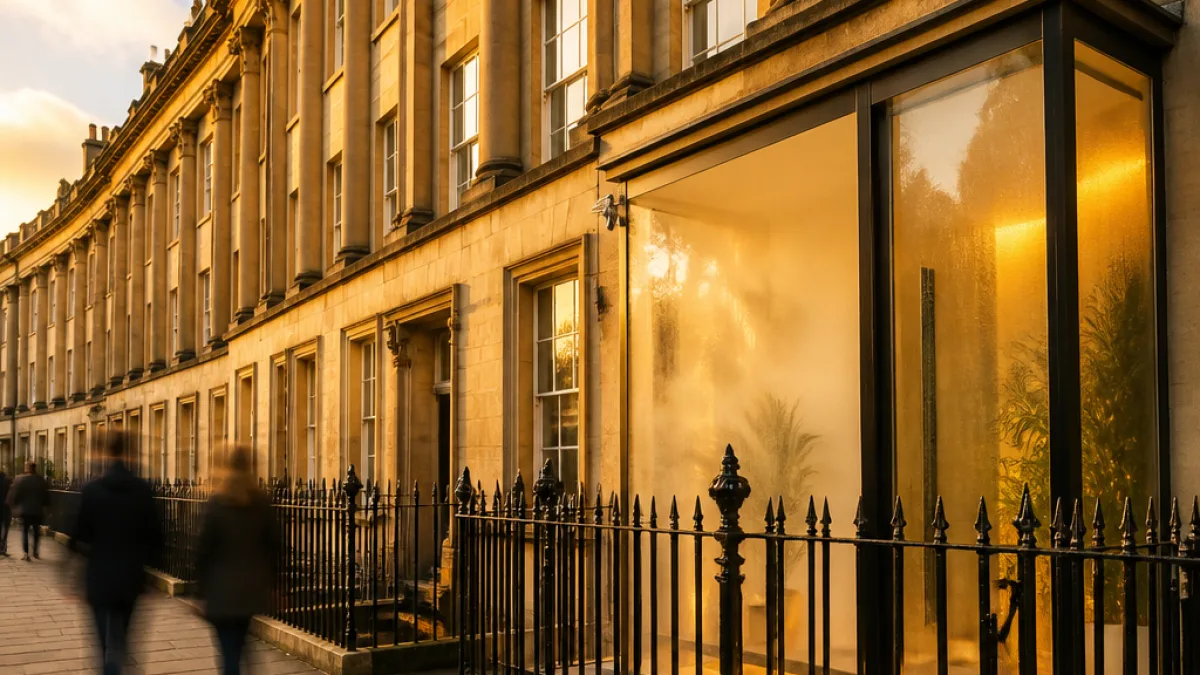
Bath’s Francis Hotel, a familiar face overlooking Queen’s Square, has completed a major refurbishment that aims to celebrate the property’s long history while sharpening its appeal to contemporary visitors. The project, led by design studio 3DReid, cost around £15 million and reworked interiors across the collection of townhouses that together make up the hotel.
A hotel stitched together from Georgian townhouses
The Francis is not a single purpose-built building but a stitched-together address formed from seven adjoining townhouses constructed between 1728 and 1736. The hotel first opened as the Francis Private Hotel in 1884, and each house brings its own provenance: Number 9 was the home of architect John Wood the Younger, while Number 10 traces its hospitality roots to Solomon Francis, the lodging-house proprietor whose name endures in the hotel’s title.
Rather than recreate a period set, 3DReid set out to create a layered, residential atmosphere that references Bath’s Georgian legacy without resorting to pastiche. The new guest rooms and public spaces deploy rich, jewel-toned panelling, padded headboards upholstered in botanical fabrics and heavy drapery alongside considered modern additions such as Roberts radios and small fridges stocked with kombucha and bottled Bath spring water.
Wellness tucked beneath the Georgian facades
Arguably the most notable addition for locals and visitors alike is the new spa, discreetly located in the lower levels of the property. The Francis Spa introduces a technology not previously available in the city: the KLAFS ESPURO Foam Steam Baths, a sensory steam installation in which a gentle flow of cleansing bubbles rises from the ceiling to cocoon bathers up to shoulder height.
"KLAFS ESPURO Foam Steam Baths"
That offering is presented as a kind of indulgent echo of Bath’s thermal bathing heritage rather than a replacement for public spring access. The hotel’s central siting, overlooking Queen’s Square and just a short walk between the Royal Crescent and the city centre, keeps it rooted in the city’s walkable layout.
Design details that nod to history without copying it
The refurbishment balances heritage detail with modern hospitality expectations. Designers retained a domestic, residential tone: personal touches and softer finishes are intended to make the accommodation feel like a lived-in town house rather than an anonymous chain hotel. Practical luxuries — such as stocked fridges and quality radios — sit alongside more conspicuous period references in the panelling and fabric choices.
- Project cost: £15 million
- Design lead: 3DReid
- Built: townhouses dated 1728–1736; hotel opened 1884
- Spa feature: KLAFS ESPURO Foam Steam Baths
| Feature | Detail |
|---|---|
| Origins | Seven townhouses, 1728–1736 |
| Hotel opening | 1884 (Francis Private Hotel) |
| Refurbishment | £15 million, completed 2026 |
For Bachelors and visitors who prize Bath’s walkability, the Francis’s position is a clear selling point. It sits beside Queen’s Square — the city’s first Georgian square — and forms a convenient base from which to explore the Royal Crescent, the city centre and, a short distance away, the Roman Baths.
How the refurbishment sits within Bath’s visitor economy
Bath’s identity is inseparable from its Georgian architecture and thermal heritage; new hotel projects are often judged against those twin standards. This conversion and refresh emphasise continuity: the spa pays respectful homage to the city’s bathing past while the interiors lean into a domesticity that reflects the houses’ original function.
There are also wider cultural links. The Roman Baths site remains a must-see and complements hotel offers: in summer, the Baths stage Friday and Saturday night Summer Lates with DJs playing vinyl amid torchlit views — an evening experience that pairs neatly with a short-stay city visit.
The Francis’s refurbished rooms and the discreet wellness offering will be watched closely by residents and tourism businesses alike. For a city that depends on a steady flow of visitors coming to see its streets and springs, projects that refresh historic buildings without erasing their character are significant — they shape how Bath looks and feels to those who live here as much as to those passing through.
As the new Francis settles into its latest incarnation, it stands as another example of how Bath’s Georgian fabric can be adapted for modern hospitality while maintaining the sense of residence and history that makes the city unique.