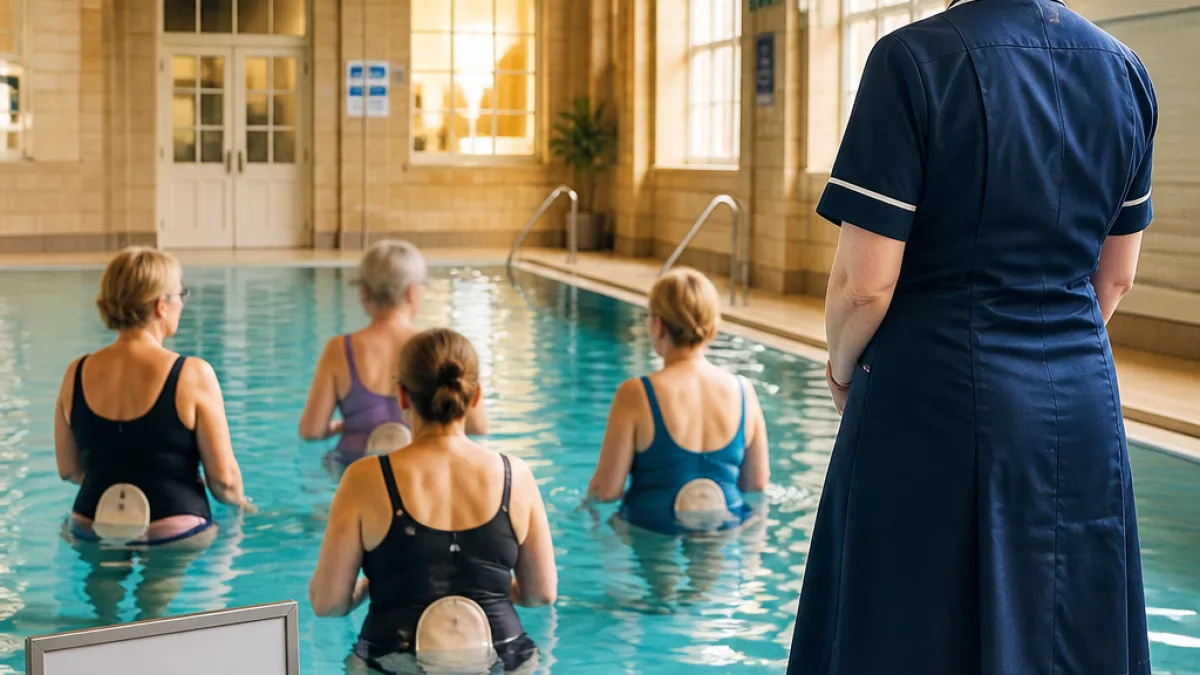
The Royal United Hospital (RUH) in Bath has introduced specialist swimming sessions for people living with stoma bags, a move aimed at rebuilding confidence, expanding physical activity options and easing social isolation after surgery.
Practical rehabilitation in water
Healthcare assistant Fiona Rogers, who runs the sessions at the RUH, said the change a stoma brings can be profound but need not curtail everyday activities. The clinic recognises that many patients become cautious about returning to pools because they fear their bags might leak or that others will stare.
Stoma nurse Helen Applegate describes the sessions as a way to remove barriers that are often psychological rather than medical. "Many stoma patients avoid swimming due to lack of confidence, worried about their bags leaking and what other people think of them," she says. "It is amazing just watching their confidence grow."
"Your anticipation of things is almost always worse than the reality, isn't it?"
Real-life benefits reported
Patients who have taken part report practical benefits. Claire, who has Crohn's disease and had a stoma fitted more than ten years ago, said the sessions gave her the confidence to swim while travelling — a trip to a geothermal pool in Iceland was a direct result of taking part. Another participant, Philip Cook (known as Cookie), recovered from cancer and had a stoma fitted earlier this year. He said the choice after surgery was stark, but that the sessions have helped him resume activities such as swimming and cycling.
Cookie's wife, Sally, told staff she hopes his example will encourage others not to feel embarrassed about showing their stoma bags in public. The RUH says the initiative is designed to normalise water-based exercise for people who might otherwise avoid it.
What the sessions offer
- Guided, small-group pool time supervised by trained staff.
- Practical advice on swimwear and stoma appliances suitable for water.
- Peer support to reduce anxiety about public visibility and leakage.
- Encouragement towards broader physical activity and travel.
The RUH hopes this model will be taken up by other NHS trusts. Staff say the sessions can be a low-cost, high-impact addition to stoma care pathways, helping patients to re-engage with leisure and improve their quality of life.
| Participant | Condition | Reported outcome |
|---|---|---|
| Claire | Crohn's disease; stoma fitted >10 years | Gained confidence; swam in a geothermal pool in Iceland |
| Philip "Cookie" Cook | Recovering from cancer; stoma fitted a few months ago | Returned to swimming and cycling; increased confidence |
Local implications
For many Bath residents living with stomas, the sessions represent more than exercise: they are a step towards normality. The city — with its spa heritage and an active outdoor culture — is well-placed to support initiatives that restore people’s freedom to use pools and open-water facilities without fear. Reinstating simple pleasures, such as swimming during holidays or routine exercise, can have measurable effects on mental health and social participation.
Clinically, supervised aquatic activity may aid physical rehabilitation by offering low-impact exercise that is gentle on joints and supportive for people rebuilding strength after surgery or ill health. Practically, the sessions also provide hands-on advice about products and clothing that make swimming feasible with a stoma.
Staff at the RUH emphasise that anticipation and anxiety are common but often disproved once patients try the sessions. They are urging other NHS trusts to consider similar programmes as part of comprehensive stoma care.
As one participant put it, the fear of getting back into a pool often outweighs the reality — and for many in Bath these sessions are helping to close that gap.