A County Antrim pensioner has embarked on a charity challenge after his wife suffered a cardiac arrest, saying:
"If I hadn’t woken, she wouldn’t have survived."The personal ordeal has highlighted for many in the locality the fragile nature of out-of-hospital cardiac arrest and the importance of prompt bystander action and community support.
From a private crisis to public action
The couple’s experience, reported this week, has moved the pensioner to take part in a public fundraising effort for charity. While details of the specific challenge and the chosen charity were not disclosed in the initial report, the case underscores how traumatic health emergencies can lead survivors and their families to engage with voluntary causes and public awareness activities in the wake of recovery.
Cardiac arrest remains one of the most time-critical medical emergencies. Survival frequently depends on rapid recognition of the collapse, immediate cardiopulmonary resuscitation (CPR) and, where available, early defibrillation. The pensioner’s statement that his wife would not have survived had he not woken emphasises the crucial role of someone nearby acting quickly.
Local implications for Antrim communities
For residents across Antrim, the account is a reminder of several practical considerations that affect outcomes from sudden cardiac arrest:
- Bystander intervention: Immediate response by people present at the scene can mean the difference between life and death.
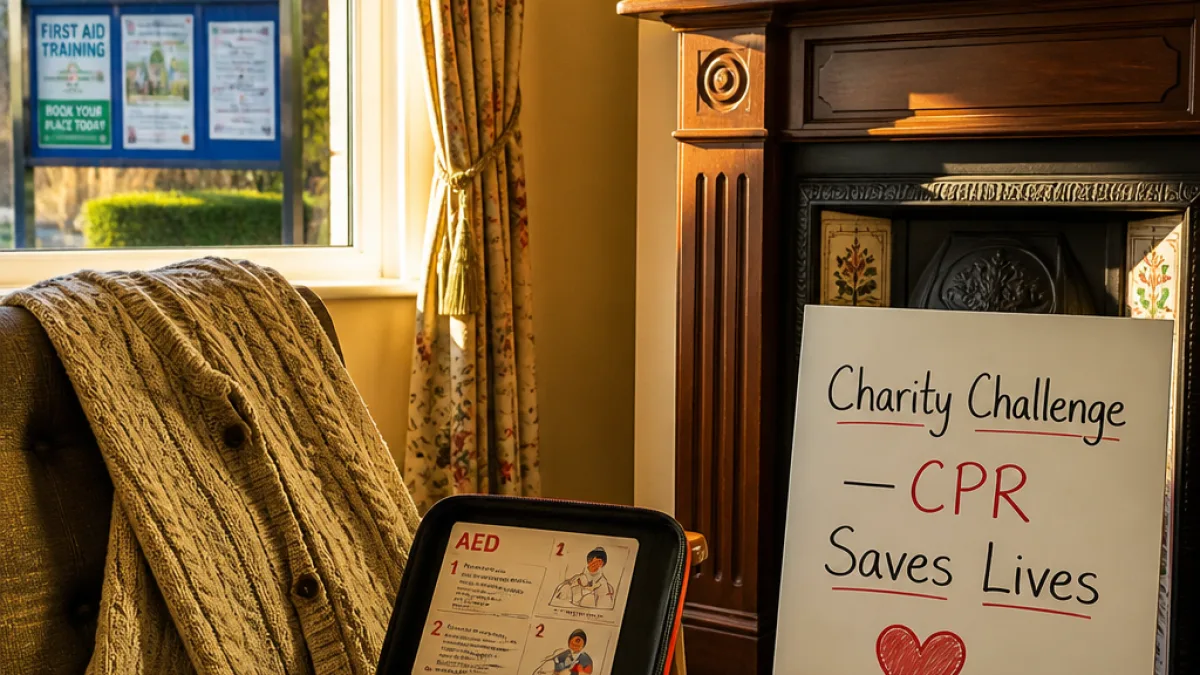
- Defibrillators: Access to automated external defibrillators (AEDs) in public places and community locations improves the chance of survival.
- Training and awareness: Basic CPR training for family members, neighbours and community groups increases the pool of potential lifesavers.
Across Northern Ireland, community groups, charities and health services promote CPR training and AED availability. Personal stories such as this one often help to galvanise local efforts, attract donations for lifesaving equipment, or inspire neighbours to organise training sessions for their area.
What this means for emergency response and charity work
Charity challenges launched in response to health emergencies can take many forms — from sponsored walks and cycles to awareness campaigns — and are a familiar means by which local people seek to give back and to prevent others suffering similar crises. Those who know of someone affected by cardiac arrest may find these activities a focus for community solidarity and fundraising.
For those organising or taking part in fundraisers, it is common to collaborate with established medical charities, first-responder groups or local health trusts to ensure funds support appropriate training, equipment purchase, or public awareness initiatives. Such partnerships can help channel public goodwill into projects that have measurable effects on survival rates.
How neighbours can help
Residents wanting to make a practical difference in Antrim can consider several steps without delay:
- Enrol on a basic CPR course or encourage family members to do so.
- Learn the locations of public AEDs in your neighbourhood and local amenities.
- Support or volunteer with community organisations that promote first-aid training and purchase AEDs.
The pensioner’s account is a stark personal reminder of how quickly an ordinary night can become a medical emergency and how immediate action by those present can preserve life. As he channels his experience into a public challenge, his story may prompt others across Antrim to consider what practical steps they might take to help their neighbours in a crisis.